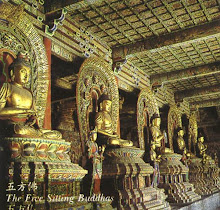
[Chinese: 大佛頂如來密因修證了義諸菩薩萬行首楞嚴經 (Da foding rulai miyin xiuzheng liaoyi zhupusa wanxing shoulengyan jing)],
(The full title:)
Sutra of the Foremost Shurangama at the Crown of the Great Buddha; and of All the Bodhisattvas' Myriad Practices for Cultivating and Certifying to the Complete Meaning of the Tathagata's Secret Cause.
(Taisho Tripitaka 0945)
Translated during the Tang Dynasty by Shramana Paramiti from central India.
(Translated into English by the Buddhist Text Translation Society)
(Revised according to the original Chinese sutra)
--------------------------------------------------------------------------------
Chapter 8 "Ananda, each of these categories of beings is replete with all twelve kinds of upside-down states, just as pressing on one's eye produces a variety of flower-like images. With the inversion of wonderful perfection, pure understanding of the true mind becomes glutted with false and random thoughts. Now, as you cultivate towards certification to the Samadhi of Buddha, you will go through three gradual stages in order to get rid of the basic cause of these random thoughts. They work in just the way that hot water mixed with the ashes of incense clease a vessel that has held poisonous honey. Afterwards, such a vessel can be used to store sweet dew.
"What are the three gradual stages? The first is to correct one's habits by getting rid of the aiding causes; the second is to truly cultivate to cut out the very essence of karmic offenses; the third is to increase one's vigor to prevent the manifestation of karma.
"What are aiding causes? Ananda, the twelve categories of beings in this world are not in complete in themselves, but depend on four kinds of eating; that is, eating by portions, eating by contact, eating by thought, and eating by consciousness. Therefore, the Buddha said that all beings must eat to live.
"Ananda, all beings can live if they eat what is fresh, and they will die if they take poison. Beings who seek Samadhi should refrain from eating five pungent plants of this world. If these five are eaten cooked, they increase one's sexual desire; if they are eaten raw, they increase one's anger. Therefore, even if people in this world who eat pungent plants can expound the twelve divisions of the Sutra canon, the gods and immortals of the ten directions will stay far away from them because they smell so bad. However, after they eat these things the hungry ghosts will hover around and kiss their lips. Being always in the presence of ghosts, their blessings and virtue will dissolve as the days go by, and they will experience no lasting benefit. People who eat pungent plants and also cultivate Samadhi will not be protected by the Bodhisattvas, gods, immortals, or good spirits of the ten directions; therefore, the tremendously powerful demon kings, able to do as they please, will appear in the body of a Buddha and speak Dharma for them, denouncing the precepts and praising lust, rage, and delusion. When their lives end, these people will join the retinue of demon kings. When they use up their blessings as demons, they will fall into the unintermittent hell. Ananda, those who cultivate for Bodhi should never eat the five pungent plants. This is the first of the gradual stages of cultivation.
"What is the essence of karmic offenses? Ananda, beings who want to enter Samadhi must first firmly uphold the pure precepts. They must exterminate sexual desire forever, not partake of wine or meat, and eat cooked rather than raw foods. Ananda, if cultivators do not cut off sexual desire and killing, it will be impossible for them to transcend the Triple Realm. You should regard sexual desire as a poisonous snake or a resentful bandit. First hold to the Hearers' Four or Eight Parajikas in order to control your physical activity; then cultivate the Bodhisattva's pure regulations in order to control your mental activity. When the precepts are successfully upheld, one will not create karma that leads to mutual rebirth and mutual killing in this world. If one does not steal, one will not be indebted, and one will not have to pay back past debts in this world. If people who are pure in this way cultivate Samadhi, they will naturally be able to contemplate the extent of the worlds of the ten directions with the physical body given them by their parents; without need of the Heavenly Eye, they will perceive the Buddhas speaking Dharma and receive in person the sagely instruction. Obtaining great spiritual penetrations, they will roam through the ten directions, gain clarity regarding past lives, and will not encounter difficulties and dangers. This is the second of the gradual stages of cultivation.
"What is the manifestation of karma? Ananda, such people as these, who are pure and who uphold the precepts, do not have thoughts of greed and sexual desire, and so they do not become dissipated in the pursuit of the six external defiling sense-objects. Because they do not pursue them, they turn around to their own source. Without the conditions of the defiling objects, there is nothing for the sense-organs to match themselves with, and so they reverse their flow, become one unit, and are no longer confined to six individual functions. All the lands of the ten directions then become as brilliantly clear and pure as a moon suspended in crystal. Their bodies and minds are blissful as they experience the equality of wonderful perfection, and they attain great peace. The secret perfection and pure wonder of all the Tathagatas appear before them. These people then obtain Patience with the Non-existence of Beings and Dharmas. They thereupon gradually cultivate according to their practices, until they reside securely in the sagely positions. This is the third of the gradual stages of cultivation.
"Ananda, these good people's emotional love and desire are withered and dry, the sense-organs and sense objects no longer mesh, and so the residual habits do not continue to arise. Recognizing that the attachments of the mind are false, they use only wisdom. That wisdom shines throughout the ten directions, and this initial wisdom is called the Stage of Dry Wisdom. Although the habits of desire are initially dried up, they still have not merged with Dharma-water that flows from the Tathagatas.
"Then, with this mind centered on the middle, they enter the flow where wonderful perfection reveals itself. From the truth of that wonderful perfection there repeatedly arise wonders of truth. They always dwell in the wonder of faith, until all false thinking is completely eliminated and the Middle Way is totally true. This is called the Mind that Resides in Faith.
"When true faith is clearly understood, then perfect penetration is total, and the three aspects of skandhas, places, and realms are no longer obstructions. Then all their habits throughout innumerable eons of past and future, during which they abandon bodies and receive bodies, appear to them now in the present moment. These good people can remember everything and forget nothing. This is called the Mind that Resides in Mindfulness.
"When the wonderful perfection is completely true, that essential true brings about a transformation. They go beyond the beginningless habits to reach the one essential brightness. Relying solely on this essential brightness, they progress toward true purity. This is called the Mind of Vigor.
"The essence of the mind reveals itself as total wisdom; this is called the Mind that Resides in Wisdom.
"As the wisdom and brightness are held steadfast, a profound stillness pervades everywhere. The stage at which the majesty of this stillness becomes constant and solid is called the Mind that Resides in Samadhi.
"The light of Samadhi emits brightness. When the essence of the brightness enters deeply within, they only advance and never retreat. This is called the Mind that is Irreversible.
"When the progress of their minds is secure, and they hold their minds and protect them without loss, they connect with the life-breath of the Tathagatas of the ten directions. This is called the Mind that Protects the Dharma.
"Protecting their light of enlightenment, they can use this wonderful force to return to the Buddha's light of compassion and to come back to stand firm with the Buddha. It is like two mirrors that are set facing one another, so that between them the exquisite images inter-reflect and enter into one another layer upon layer. This is called the Mind that Makes Transferences.
"With this secret interplay of light, they obtain the Buddha's eternal solidity and unsurpassed wonderful purity. Dwelling in the unconditioned, they know no loss or dissipation.
This is called the Mind that Resides in Precepts.
"Abiding in the precepts with self-mastery, they can roam throughout the ten directions, going anywhere they wish. This is called the Mind that Resides in Vows.
"Ananda, these good people use proper expedients to bring forth those ten minds. The essence of these minds becomes dazzling, and their ten functions interconnect to a point of single-mindedness. That is called the Dwelling of Bringing Forth the Resolve.
"The discoveries made by that mind are like pure crystal within which can be seen pure gold. Based on those previous wonderful minds, they step up to this level called the Dwelling of the Ground of Regulation.
"When the mind on that ground connects with wisdom, both become bright and comprehensive. Traversing the ten directions then without obstruction is called the Dwelling of Cultivation.
"When their conduct is the same as the Buddhas' and they connect with the Buddha's spirit, then, like the body-between-skandhas searching for a father and mother, they penetrate the darkness with a hidden communication and enter the lineage of the Tathagata. That is called the Dwelling of Noble Birth.
"Since they ride in the womb of the Way, they are heirs to enlightenment just as a mature fetus has developed all human features. That is called the Dwelling that is Endowed with Skill-in-Means.
"Their physical appearances become those of Buddhas and their minds the same as well. That is called Dwelling in the Proper Mind.
"United in body and mind, they grow and mature day by day. That is called Dwelling in Irreversibility.
"With the efficacious appearance of ten bodies, which are simultaneously perfected, they are Dwelling as a Pure Youth.
"Completely developed, they leave the womb and become sons of the Buddha. That is Dwelling as a Dharma Prince. Reaching the fullness of adulthood, they are like a chosen prince to whom a mighty king turns over the affairs of state. Eventually that eldest son of the kshatriya king will be ceremoniously anointed on the crown of the head. That is called Dwelling in Anointing the Crown of the Head.
"Ananda, after these good men have become sons of the Buddha, they are replete with the limitlessly many wonderful virtues of the Tathagatas, and they comply and accord with beings throughout the ten directions. That is called the Conduct of Happiness.
"Being well able to accommodate all beings is called the Conduct of Benefiting.
"Enlightening themselves and enlightening others without putting forth any resistance is called the Conduct Free of Anger.
"Then they undergo birth in various forms continuously to the bounds of the future. Practicing that equally throughout the three periods of time and pervading the ten directions is called the Conduct Continued Endlessly.
"When everything is equally in accord, one never makes mistakes among the various Dharma doors. That is called 'he Conduct of Freedom from Deluded Confusion.
"Then within what is identical, myriad differences appear.
Yet within the different appearances, an identity can be perceived.
That is called the Conduct of Wholesome Manifestation.
"That continues until it includes all particles of dust that fill up empty space throughout the ten directions. In each and every mote of dust there appear the worlds of the ten directions. And yet the appearance of dust motes and the appearance of worlds do not interfere with one another. That is called the Conduct of Non-Attachment.
"Everything that appears before one becomes a foremost paramita. That is called the Conduct of Veneration.
"With such perfect fusion, one can model oneself after all the Buddhas of the ten directions. That is called the Conduct Based on Wholesome Dharmas.
"As each and every one of those becomes pure and without outflows, they merge into a singular truth, unconditioned, that is the essence of the nature. That is called the Conduct of Reality.
"Ananda, when these good men replete with spiritual penetrations have done the Buddha's work and are totally pure and absolutely true, they can remain distant from obstacles and calamities. Then they take beings across without being attached to the idea of taking them across. They direct the unconditioned mind toward the path of Nirvana. That is called the Transference of Saving and Protecting Living Beings, while apart from the Appearance of Living Beings.
"Destroying what should be destroyed and remaining far removed from what should be left behind is called the Transference of Indestructibility.
"Fundamental Enlightenment is profound indeed, an enlightenment on a level with the Buddhas' enlightenment. That is called the Transference of Sameness with All Buddhas.
"When absolute truth is discovered, their level is like the level of Buddhas. That is called the Transference of Reaching all Places.
"Worlds and Tathagatas include one another without any obstruction. That is called the Transference of a Treasury of Inexhaustible Merit and Virtue.
"Since their level is like the Buddhas', each and every cause they create at that level is pure. Based on the dispersing of such causes, they go straight down the path to Nirvana. That is called the Transference of the Good Roots of Following what is Basically Identical.
"When true roots are set down, then all beings in the ten directions are my own nature. Not a single being is lost, as this nature is successfully perfected. That is called the Transference of Following the Impartial Contemplation of all Beings.
"Being identical with all dharmas yet apart from all phenomena, they are not attached to either the identity or the separation. That is called the Transference of the Appearance of True Suchness.
"That which is thus is truly obtained, and there is no obstruction throughout the ten directions. That is called the Transference of Unfettered Liberation.
"When the virtue of the nature is perfectly realized, the boundaries of the Dharma Realm are destroyed. That is called the Transference of the Limitlessness of the Dharma Realm.
"Ananda, when these good men have completely purified these forty-one minds, they further accomplish Four Kinds of Wonderfully Perfect Aiding Practices.
"The enlightenment of a Buddha is just about to become a function of their own minds. It is on the verge of emerging but has not yet emerged, and so it can be compared to the point just before wood ignites when it is drilled to produce fire. That is called the Level of Heat.
"They continue on with their own minds to tread where the Buddhas tread, as if relying and yet not. It is as if they were climbing a lofty mountain, to the point where their bodies are in space but there remains a slight obstruction beneath them. That is called the Level of the Summit.
"When the mind and the Buddha are two and yet the same, they have well obtained the Middle Way. They are like someone who endures something when it seems impossible to either hold it in or let it go. That is called the Level of Patience.
"When numbers and limits are gone, no such designations as the Middle Way or as confusion and enlightenment are made. That is called the Level of Being First in the World.
"Ananda, these good men have successfully penetrated through to Great Bodhi. Their enlightenment reaches through to the Tathagatas'. They have fathomed the state of Buddhahood. That is called the Ground of Happiness.
"The differences enter into identity; even the notion of identity is gone. That is called the Ground of Leaving Filth.
"At the point of ultimate purity, brightness comes forth. That is called the Ground of Emitting Light.
"When the brightness becomes ultimate, enlightenment is full.
That is called the Ground of Blazing Wisdom.
"No identity or difference can be attained. That is called the Ground of Invincibility.'
"With unconditioned True Suchness, the nature is spotless, and brightness is revealed. That is called the Ground of Manifestation.
"Coming to the farthest limits of True Suchness is called the Ground of Traveling Far.
"The single mind of True Suchness is called the Ground of Immovability.
"Bringing forth the function of True Suchness is called the Ground of Good Wisdom.
"Ananda, all Bodhisattvas beyond this point have completed their cultivation and have perfected their merit and virtue, and so this Ground is called the Level of Cultivation.
"Then a wonderful cloud of compassion hovers over the Sea of Nirvana. That is called 'the Ground of the Dharma Cloud.
"The Tathagatas counter the flow as the Bodhisattvas thus reach this point through compliance with practice. Their enlightenment is about to meet that of the Buddhas; it is therefore called Equal Enlightenment.
"Ananda, the enlightenment which encompasses the Mind of Dry Wisdom through to the culmination of Equal Enlightenment is awakening within the Varja Mind. That constitutes the Level of Initial Dry Wisdom. Thus there are totals of twelve single and grouped levels. At last they reach Wonderful Enlightenment and accomplish the Unsurpassed Way. At all these levels they use vajra contemplation of Ten Profound Analogies for the ways in which things are like an illusion. In Shamatha they use the Tathagatas' Vipashyana to cultivate them purely, to be certified to them, and to gradually enter them more and more deeply. Ananda, because they put to use the three means of advancement throughout all of them, they are well able to accomplish the fifty-five stages of the True Bodhi Path"This manner of contemplation is called proper contemplation.
Contemplation other than this is called deviant contemplation."
Then Dharma Prince Manjushri arose from his seat, and in the midst of the assembly he bowed at the Buddha's feet and said to the Buddha, "What is the name of this Sutra and how should we and all beings uphold it?"
The Buddha told Manjushri, "This Sutra is called the Crown of Great Buddha, Sitata-Patra, the Unsurpassed Precious Seal and Pure, Clear, Ocean-like Eye of the Tathagatas of the Ten Directions."
"It is also called The Cause for Saving a Relative, the Rescue of Ananda and the Bhikshuni Nature, and the Attaining of the Bodhi-Heart and Entry into the Sea of Pervasive Knowledge."
"It is also called The Tathagatas' Secret Cause of Cultivation that Brings Certification to the Complete Meaning."
"It is also called The Great Expansive Means, the Wonderful Lotus Flower King, the Dharani Mantra which is the Mother of all Buddhas of the Ten Directions."
"It is also called The Foremost Shurangama, Sections and Phrases for Anointing the Crown of the Head, and All Bodhisattvas' Myriad Practices."
"Thus should you respectfully uphold it."
(In-depth explanation on causes and retributions:) After that was said, Ananda and all in the great assembly immediately received the Tathagata's instruction in the secret seal, the meaning of Patra, and heard these names for the complete meaning of this Sutra. They were suddenly enlightened to Dhyana, advanced in their cultivation to the sagely position, and increased their understanding of the wonderful principle. Their minds were focused and serene.
Ananda cut off and cast aside six sections of subtle afflictions in his cultivation of the mind in the Triple Realm. He arose from his seat, bowed at the Buddha's feet, places his palms together respectfully, and said to the Buddha, "The Great, mighty and Virtuous Bhagavan, whose compassionate sound knows no limit, has well instructed beings as to their extremely subtle submersion in delusion and has caused me on this day to become blissful in body and mind and to obtain enormous benefit. Bhagavan, if the wonderful brightness of this truly pure and wonderful mind is basically all-pervading, then everything on the great earth, including the grasses and trees, the wriggling worms and tiny forms of life are originally True Suchness and are themselves the Tathagata- true embodiments of Buddhahood. Since the Buddhas' embodiments are true and real, how can there also be hells, hungry ghosts, animals, asuras, humans, gods, and other paths of rebirth? Bhagavan, do these paths exist naturally of themselves, or are they created by beings' falseness and habits?
"Bhagavan, the Bhikshuni Precious Lotus Fragrance, for example, received the Bodhisattva Precepts and then indulged in lustful desire, recklessly saying that sexual acts did not involve killing or stealing and they carried no karmic retribution. But after saying that, her female organs caught fire, and then the raging blaze spread throughout all her joints as she fell into the Unintermittent Hell alive. And there were the Mighty King Crystal and the Bhikshu Good Stars. Crystal exterminated the Gautama clan and Good Stars recklessly said that all dharmas are empty. They both sank into the Unintermittent Hell alive. Are these hells fixed places, or do they arise spontaneously? Is it that each individual undergoes whatever kind of karma he or she creates? I only hope the Buddha will be compassionate and instruct those of us who do not understand this. May he cause all beings who uphold the precepts to receive this definitive instruction with joyful respect upon hearing it and be careful not to transgress it."
The Buddha said to Ananda, "What a good question! You want to keep all living beings from adopting deviant views. You should listen attentively now and I will explain this matter for you."
"Actually, Ananda, all beings are fundamentally true and pure, but because of their false views they give rise to the falseness of habits, which are divided into an internal aspect and an external aspect."
"Ananda, the internal aspect refers to what occurs inside living beings. Because of love and defilement, they produce the falseness of emotions. When these emotions accumulate without cease, they can create the fluids of love. That is why living beings' mouths water when they think about delicious food. When they think about a deceased person, either with fondness or with anger, tears will flow from their eyes. When they are greedy for wealth, a current of lust will course through their hearts and their skin will become lustrous. When their minds dwell on lustful conduct, spontaneous secretions will come from the male or female organ. Ananda, although the kinds of love differ, their flow and formation is the same. With this moisture, one cannot ascend, but will naturally fall. This is called the Internal Aspect."
"Ananda, the External Aspect refers to what happens outside living beings. Because of longing and yearning, they give rise to fantasies. When these fantasies persist without cease, they can create an uplifting energy. That is why when living beings uphold the precepts in their minds, their bodies will be buoyant and feel light and clear. When they uphold mantra seals in their minds, they will command a heroic and resolute perspective. When they have the desire in their minds to be born in the heavens, in their dreams they will have thoughts of flying and ascending. When they cherish the Buddhalands in their minds, then the sagely realms will appear in a shimmering vision, and they will serve the good and wise advisors with little thought for their own lives. Ananda, although the thought varies, the lightness and uplifting is the same. With flight and ascension, one will not sink, but will naturally become transcendent. This is called the External Aspect."
"Ananda, all beings in the world are caught up in the continuity of birth and death. Birth happens because of their habitual tendencies; death results inflow and change. When they are on the verge of dying, but when the final warmth has not left their bodies, all the good and evil they have done in that life suddenly and simultaneously manifest. They experience the intermingling of two habits: an abhorrence of death and an attraction to life."
"Endowed solely with thought, they will fly and can certainly be reborn in the heavens. If fly into the heart, with blessings and wisdom, as well as pure vows, then their hearts will spontaneously open and they will see the Buddhas of the ten directions and all their pure lands and they will be reborn in whichever one they wish."
"When they have more thought than emotion, they are not quite as ethereal and so they become flying immortals, great mighty ghost kings, space traveling-yakshas, or earth-traveling rakshasas who roam the Heaven of the Four Kings, going where they please without obstruction. Among them may be some with good vows and good hearts who will protect and uphold my dharma. Perhaps they protect the pure precepts by following and supporting those who hold precepts. Perhaps they protect holy mantras by following and supporting those who hold mantras. Perhaps they protect those who practice Dhyana Samadhi so they can cultivate Dharma-Ksanti(forbearance)s. These beings will be close to the Tathagata beneath his seat."
"When their thought and emotion are of equal proportions, they neither fly nor fall, but are born in the human realm, where the brightness of thought leads to intelligence and the darkness of emotion leads to dullness."
"When they have more emotion than thought, they enter the animal realm. With heavier emotion, they become fur-bearing beasts; with lighter emotion, they become winged creatures."
"When they have seventy percent emotion and thirty percent thought, they fall beneath the wheel of water and are bordering on the wheel of fire, where they experience the full force of the raging blaze. In the bodies of hungry ghosts, they are constantly burned to a crisp. Even water harms them, and they have nothing to eat or drink for hundreds of thousands of eons."
"When they have ninety percent emotion and ten percent thought, they fall through the wheel of fire until their bodies enter a region where wind and fire interact. With lighter emotion they are born in the intermittent hell; with heavier emotion they are born in the unintermittent hell. When they are possessed entirely of emotion, they sink into the Avici Hell. If in their minds they slander the Mahayana, defame the Buddha's pure precepts, irrationally speak dharma, are greedy for offerings from the faithful, recklessly accept the respect of others, commit the five rebellious acts and the ten major offenses, then they are further reborn in Avici Hell throughout the ten directions. Although one receives one's due according to the evil karma one has created, a group can undergo an identical lot, and there are definite places where it occurs."
"Ananda, it all comes from the karmic responses which living beings themselves invoke. They create ten habitual causes and undergo six interacting retributions. What are the ten causes? Ananda, the first consists the habit of lustful intercourse which gives rise to mutual rubbing. When this rubbing continues without cease, it activates a tremendous raging fire, just as warmth arises between a person's hands when he rubs them together. Because these two habits set each other ablaze, there come into being the Iron Bed, the Copper Pillar, and other such experiences. Therefore the Tathagatas of the ten directions look upon the act of lust and name it the 'fire of desire.' Bodhisattvas avoid desire as they would a fiery pit."
"The second consists of the habit of greedy scheming, which gives rise to a suction. When this suction continues without cease, it produces intense cold and solid ice where freezing occurs, just as a sensation of cold is experienced when a person draws in a blast of wind through his mouth. Because these two habits clash together, there come into being Cold Hells such as chattering, whimpering and shuddering; blue, red, and white lotuses; and other such experiences. Therefore the Tathagatas of the ten directions look upon excessive seeking and name it 'the water of greed'. Bodhisattvas avoid greed as they would a sea of pestilence."
"The third consists of habits of arrogance and resulting friction which give rise to mutual intimidation. When it accelerates without cease, it produces torrents and rapids which create restless waves of water, just as water is produced when a person continuously works his tongue in an effort to taste flavors. Because these two habits incite one another, there come into being the river of blood, the river of ashes, the burning sand, the poisonous sea, the molten copper which is forced down one's throat, and other such experiences. Therefore, the Tathagatas of the ten directions look upon self-satisfaction and name it 'drinking the water of stupidity.' Bodhisattvas avoid arrogance as they would a huge deluge."
"The fourth consists of habits of hatred which give rise to mutual defiance. When this defiance binds one without cease, one's heart becomes so hot that it catches fire, and the molten vapors turn into metal. From it is produced the mountain of knives, the iron cudgel, the tree of swords, the wheels of swords, axes and halberds, and spears and saws. It is like when a person harbors a grudge and the urge to kill surges forth. Because these two habits clash with one another, there come into being castration and hacking, beheading and mutilation, filing and sticking, flogging and beating, and other such experiences. Therefore, the Tathagatas of the ten directions look upon hatred and name it 'sharp knives and swords.' Bodhisattvas avoid hatred as they would a massacre."
"The fifth consists of habits of deception and misleading involvements which give rise to mutual guile. When such maneuvering continues without cease, it produces ropes for strangling and wood for imprisoning. It is like how grass and trees grow in an irrigated field. Because the two habits perpetuate one another, there come into being handcuffs and fetters, cangues and locks, whips and clubs, sticks and cudgels, and other such experiences. Therefore, the Tathagatas of the ten directions look upon deception and name it a 'treacherous crook.' Bodhisattvas fear deception as they would a savage wolf."
"The sixth consists of the habit of lying combined with continual fraudulence which give rise to mutual cheating. When false accusations continue without cease, one becomes adept at corruption. From this there come into being such filthy impurities as dirt, excrement and urine. It is like the obscuring of one's vision when the dust is stirred up by the wind. Because these two habits augment one another, there come into being sinking and drowning, tossing and pitching, flying and falling, floating and submerging, and other such experiences. Therefore, the Tathagatas of the ten directions look upon lying and name it 'robbery and murder.' Bodhisattvas regard lying as they would treading on a venomous snake."
"The seventh consists of the habits of enmity and mutual suspicion, which give rise to grievances. From this there come into being the experiences of being pelted by flying rocks or gravel, being imprisoned in a box, car, or urn; and being bagged and struck. It is like a treacherous person who harbors evil in his mind. Because these two habits swallow one another up, there come into being tossing, pitching, seizing, striking, and banging, and other such experiences. Therefore, the Tathagatas of the ten directions look upon animosity and name it a 'perverse and harmful ghost.' Bodhisattvas regard animosity as they would drinking poisonous wine."
"The eighth consists of the habit of expressing (wrong) views, such as those of satkayadrishti, prohibitions, grasping, and other deviant insights and the karma involved in these, which result from contradiction and opposition. From these there come into being court officials and deputies holding documents, whom one meets as if they were people coming and going on the road. Because these two habits influence one another, there come into being official inquiries, baited questions, examinations, interrogations, public investigations, exposure, the youths who record good and evil, carrying the record books of the offenders' arguments and rationalizations, and other such experiences. Therefore, the Tathagatas of the ten directions look upon evil views and name them the 'pit of views.' Bodhisattvas regard having false and one-sided views as they would standing on the edge of a steep ravine full of poison."
"The ninth consists of the habit of injustice that comes from instigating false charges and libeling. From them are produced crushing between mountains, crushing between rocks, stone rollers, stone grinders, plowing, and grinding. It is like a slanderous villain who engages in persecuting good people unjustly. Because these two habits join ranks, there come into being pressing and pushing, bludgeons and compulsion, squeezing and straining, weighing and measuring, and other such experiences. Therefore, there Tathagatas of the ten directions look upon harmful accusations and name them 'a treacherous tiger.' Bodhisattvas regard injustice as they would a bolt of lightning."
"The tenth consists of the habits of litigation and the mutual disputations which give rise to covering. From them are produced the mirror that reflects and the lamp that shines, exposing one just as if one were in direct sunlight and had no way to hide one's shadow. Because these two habits bicker back and forth, there come into being evil companions, the mirror of karma, the fiery pearl, exposure of past karma, inquests, and other such experiences. Therefore, all the Tathagatas of the ten directions look upon covering and name it a 'hidden villain.' Bodhisattvas regard covering as they would having to carry a mountain atop their heads while walking upon the sea."
"What are the six retributions? Ananda, all living beings create karma with their six consciousnesses. The evil retributions they call down upon themselves come from the six sense organs."
"What are the evil retributions that arise from the six sense organs? The first is the retribution of seeing, which brings an evil result. The karma of seeing intermingles, so that at the time of death one first sees a raging conflagration which fills the ten directions. The deceased one's spiritual consciousness takes flight, but then falls. Riding on a wisp of smoke, it enters the unintermittent hell. There, two kinds of phenomena may occur. The first is clear perception, in which one sees all sorts of evil things. This causes one to experience boundless fear. The second is obscure perception, which is a stillness devoid of seeing. This causes one to experience boundless terror. When the fire that comes from seeing burns the sense of hearing, it becomes cauldrons of boiling water and molten copper. When it burns the breath, it becomes black smoke and purple fumes. When it burns the sense of taste, it becomes scorching hot pellets and molten iron gruel. When it burns the sense of touch, it become white-hot embers and glowing coals. When it burns the mind, it becomes sparks of fire that shower everywhere and whip up and inflame the entire realm of space."
"The second is the retribution of hearing, which brings an evil result. The karma of hearing intermingles, and thus at the time of death one first sees gigantic waves that drown the whole world. The deceased one's spiritual consciousness falls into the water and rides the current into the unintermittent hell. There, two kinds of phenomena may occur. One is open hearing, in which it hears all sorts of noise and its essential spirit becomes confused. The other is closed hearing, in which there is a stillness devoid of hearing, and its soul sinks into oblivion. When the waves from hearing flow into the hearing, they become scolding and interrogation. When they flow into the seeing, they become thunder and roaring and evil poisonous vapors. When they flow into the breath, they become rain and fog permeated with poisonous organisms that entirely fill up the body. When they flow into the sense of taste, they become pus a nd blood and every kind of filth. When they flow into the sense of touch, they become animals and ghosts, and excrement and urine. When they flow into the mind, they become lightning and hail which ravage the heart and soul."
"The third is the retribution of smelling, which brings an evil result. The karma of smelling intermingles, and thus at the time of death one first sees a poisonous vapor that permeates the atmosphere near and far. The deceased one's spiritual consciousness wells up out of the earth and enters the unintermittent hell. There, two kinds of phenomena may occur. One is penetrating smelling, in which one is thoroughly infused with the evil vapors and one's mind becomes distressed. The other is blocked smelling, in which one's breath is cut off and there is no passage, and one lies stifled and suffocating on the ground. When the vapor of smelling invades the breath, it becomes cross-examination and torture. When it invades the seeing, it becomes fire and torches. When it invades the hearing, it becomes sinking and drowning, molten metal and boiling liquids. When it invades the sense of taste, it becomes putrid or rancid foods. When it invades the sense of touch, it becomes the actions of ripping apart and beating to a pulp. It also becomes a huge mountain of flesh which has hundreds and thousands of eyes and which is sucked and fed upon by numberless worms. When it invades the mind, it becomes ashes, pestilent air, and flying sand and gravel which cut the body to ribbons."
"The fourth is the retribution of tasting, which brings an evil result. This karma of tasting intermingles, and thus at the time of death one first sees an iron net ablaze with a raging fire that covers over the entire world. The deceased one's spiritual consciousness passes down through this hanging net, and suspended upside down it enters the unintermittent hell. There, two kinds of phenomena may occur. One is a sucking air which congeals into ice so that it freezes the flesh of his body until it bursts open. The other is a spitting blast of air which spews out a raging fire that roasts his bones and marrow to a crisp. When the tasting of flavors passes through the sense of taste, it becomes what must be acknowledged and what must be endured. When it passes through the seeing, it becomes burning metal and stones. When it passes through the hearing, it becomes sharp weapons and knives. When it passes through the sense of smell, it becomes a vast iron cage that encloses the entire land. When it passes through the sense of touch, it becomes bows and arrows, crossbows, and darts. When it passes through the mind, it becomes flying pieces of molten iron that rain down from out of space."
"The fifth is the retribution of touching, which brings an evil result. The karma of touching intermingles, and thus at the time of death one first sees huge mountains closing in on one from four sides, leaving no path of escape. The deceased one's spiritual consciousness then sees a vast iron city. Fiery snakes and fiery dogs, wolves, lions, ox-headed jail keepers, and horse-headed rakshasas brandishing spears and lances drive it into the iron city toward the unintermittent hell. There, two kinds of phenomena may occur. One is touch that involves coming together, in which mountains come together to squeeze its body until its flesh, bones, and blood are totally dispersed. The other is touch that involves separation, in which knives and swords attack the body, ripping the heart and liver to shreds. When this touching passes through the sensation of touch, it becomes colliding, striking, stabbing, and piercing. When it passes through the seeing, it becomes burning and scorching. When it passes through the hearing, one hears the sounds on the path to the hells, at the gate to the hells, and in the courts of trial. . When it passes through the sense of smell, it becomes enclosures, bags, interrogation, and binding up. When it passes through the sense of taste, it become plowing, pinching, chopping, and severing. When it passes through the mind, it becomes falling, flying, frying, and broiling."
"The sixth is the retribution of thinking, which brings an evil result. The karma of thinking intermingles, and thus at the time of death one first sees a foul wind which devastates the land. The deceased one's spiritual consciousness is blown up into space, and then, spiraling downward, it rides that wind straight into the unintermittent hell. There, two kinds of phenomena may occur. One is extreme confusion, which causes it to be frantic and to race about ceaselessly. The other is not confusion, but rather an acute awareness which causes it to suffer from endless roasting and burning, the extreme pain of which is difficult to bear. When this deviant thought combines with thinking, it becomes locations and places. When it combines with seeing, it becomes inspection and testimonies. When it combines with hearing, it becomes huge crushing rocks, ice and frost, dirt and fog. When it combines with smelling, it becomes a great fiery car, a fiery boat, and a fiery jail. When it combines with tasting, it becomes loud calling, wailing, and regretful weeping. When it combines with touch, it becomes sensations of large and small, where ten thousand births and ten thousands deaths are endured every day, and of lying with one's face to the ground."
"Ananda, these are called the ten causes and six retributions of the hells, which are all created by the confusion and falseness of living beings."
"If living beings create this evil karma simultaneously, they enter the Avici Hell and endure limitless suffering, passing through limitless kalpas."
"If each of the six sense organs creates them and if what is done includes each state and each sense organ, then the person will enter the Eight Unintermittent Hells."
"If the three karmas of body, mouth, and mind commit acts of killing, stealing, and lust, the person will enter the Eighteen Hells."
"If the three karmas are not all involved, and there is perhaps just one act of killing and one of stealing, then the person must enter the Thirty-six Hells."
"If the sense organ of sight alone commits just one karmic offense, then the person must enter the one hundred and eight hells. "
"Because of this, living beings who do certain things create certain karma, and so in the world they enter collective hells, which arise from false thinking and which originally are not there at all."
"And then, Ananda, after the living beings who have slandered and broken the precepts, violated the Bodhisattva precepts, slandered the Buddha's Nirvana, and created various other kinds of karma, pass through many kalpas of being burned in the inferno, they finally finish paying for their offenses and are reborn as ghosts."
"If greed for material objects was the original cause that made the person commit offenses, then, after he has finished paying for his crimes, he will take shape when he encounters material objects and will become a strange ghost."
"If it was indulgence in lust that made the person commit offenses, then, after he has finished paying for his crimes, he will take shape when he encounters the wind and will become a drought ghost."
"If it was indulgence in lying that made the person commit offenses, then, after he has finished paying for his crimes, he will take shape when he encounters animals and will become a mei ghost."
"If it was hatred that made the person commit offenses, then, after he has finished paying for his crimes, he will take shape when he encounters worms and insects, and will become a gu poison ghost."
"If it was the harboring of grudges that made the person commit offenses, then, after he has finished paying for his crimes, he will take shape when he encounters degeneration and will become a pestilence ghost."
"If it was arrogance that made the person commit offenses, then, after he has finished paying for his crimes, he will take shape when he encounters gases and will become a hungry ghost."
"If it was injustice to others that made the person commit offenses, then after he has finished paying for his crimes, he will take shape when he encounters darkness and will become a paralysis ghost."
"If it was attachment to wrong views that made the person commit offenses, then, after he has finished paying for his crimes, he will take shape when he encounters essential energy and will become a wang liang ghost."
"If it was deception that made the person commit offenses, then, after he has finished paying for his crimes, he will take shape when he encounters brightness and will become a servant ghost."
"If it was the practice of forming factions that made the person commit offenses, then, after he has finished paying for his crimes, he will take shape when he encounters people and will become a messenger ghost."
"Ananda, such a person's fall is due to his totally emotional level of functioning. When his karmic fire has burned out, he will rise up to be reborn as a ghost. This is occasioned by his own karma of false thinking. If he awakens to Bodhi, then in the wonderful perfect brightness there isn't anything at all."
"Moreover, Ananda, when his karma as a ghost is ended and the consequences of his emotion and thought are over, he comes into the world to meet his creditors and settle his accounts with them. He is born as an animal to repay his debts from past lives."
"The retribution of the strange ghost of material objects is finished when the object is destroyed and it is reborn in the world, usually as a species of owl."
"The retribution of the drought ghost of the wind is finished when the wind subsides, and it is reborn in the world, usually as a species of uncanny creature which gives inauspicious prognostications."
"The retribution of the mei ghost of an animal is finished when the animal dies, and it is reborn in the world, usually as a species of fox."
"The retribution of the gu ghost in the form of worms and insects is finished when the gu is exhausted, and it is reborn in the world, usually as a species of venomous creature."
"The retribution of a pestilence ghost found in degeneration is finished when the degeneration is complete, and it is reborn in the world, usually as a species of tapeworm."
"The retribution of the ghost which takes shape in gases is finished when the gases are gone, and it is then reborn in the world, usually as a species of animal used for food."
"The retribution of the ghost of darkness is finished when the darkness ends, and it is then reborn in the world, usually as a species of animal used for clothing or service."
"The retribution of the ghost which unites with energy is finished when the union dissolves, and it is then reborn in the world, usually as a species of migratory creature."
"The retribution of the ghost of brightness and intellect is finished when the brightness disappears, and it is then reborn in the world, usually as a species of efficacious creature."
"The retribution of the ghost that relies on a person is finished when the person dies, and it is then reborn in the world, usually as a species of domestic animal."
"Ananda, all this is due to the burning out of his karmic fire in payment for his debts from past lives. The rebirth as an animal is also occasioned by his own false and empty karma. If he awakens to Bodhi, then fundamentally none of these false conditions will exist at all. You mentioned Precious Lotus Fragrance, King Crystal, and Bhikshu Good Stars. Evil karma such as theirs was created by them alone. It did not fall down out of the heavens or well up from the earth, nor was it imposed upon them by some person. Their own falseness brought it into being, and so they themselves have to undergo it. In the Bodhi-Heart, it is empty and false--a cohesion of false thoughts."
"Moreover, Ananda, if while repaying his past debts by undergoing rebirth as an animal, such a living being pays back more than he owed, he will then be reborn as a human to rectify the excess. If the creditor is a person with strength, blessings, and virtue, then he can pay what he collected in excess without having to lose his human form. But if he lacks blessings, then he will be reborn as an animal to pay the outstanding balance."
"Ananda, if the debt involves money, material goods, or manual labor, then once it is paid, the debt is resolved. But if in the process of repayment the lives of other beings were taken or their flesh eaten, then it will start a cycle of mutual devouring and slaughtering that will send the debtors and creditors up and down endlessly for as many eons as there are atoms of universe. There is no way to put a stop to it, except through Shamatha or through a Buddha's coming to the world."
"You should know that when owls and their kind have paid back their debts, they regain their original form and are born as obstinate people."
"When creatures that are inauspicious have paid back their debts, they regain their original form and are born as abnormal people."
"When foxes have paid back their debts, they regain their original form and are born as people who are simpletons."
"When creatures of the venomous category have paid back their debts, they regain their original form and are born as malicious people."
"When tapeworms and their like have paid back their debts, they regain their original form and are born as lowly people."
"When the edible types of creatures have paid back their debts, they regain their original form and are reborn as weak people."
"When creatures that are used for clothing or service have paid back their debts, they regain their original form and are reborn as people who do hard labor."
"When creatures that migrate have paid back their debts, they regain their original form and are reborn as literary people."
"When efficacious creatures have paid back their debts, they regain their original form and are reborn as intelligent people."
"When domestic animals have paid back their debts, they regain their original form and are reborn as sophisticated people."
"Ananda, these are all beings that have finished paying back former debts and are born again in the human realm. They are involved in a beginningless scheme of karma and delusion and spend their lives killing and being killed by one another. They do not get to meet the Tathagata or hear the Proper Dharma. They just abide in the wearisome dust, passing through a repetitive cycle. Such people can truly be called pitiful."
"Furthermore, Ananda, there are people who do not rely on Proper Enlightenment to cultivate Samadhi, but cultivate in some special way that is based on their false thinking. Holding to the idea of perpetuating their physical bodies, they roam in the mountains and forests in places people do not go and become Ten Kinds of Immortals."
"Ananda, some living beings with unflagging resolution make themselves strong with specially prepared foods. When they have perfected this method of dieting, they are known as earth-traveling immortals."
"Some of these beings with unflagging resolution make themselves strong through the use of grasses and herbs. When they have perfected this method of taking herbs, they are known as flying immortals."
"Some of these beings with unflagging resolution make themselves strong through the use of metal and stone. When they have perfected this method of transformation, they are known as roaming immortals."
"Some of these beings with unflagging resolution make themselves strong through movement and stillness. When they have perfected their energy and essence, they are known as space-traveling immortals."
"Some of these beings with unflagging resolution make themselves strong by using the flow of saliva. When they have perfected the virtues of this moisture, they are known as heaven-traveling immortals."
"Some of these beings with unflagging resolution make themselves strong with the essence of sun and moon. When they have perfected the inhalation of this essence, they are known as all-penetrating immortals."
"Some of these beings with unflagging resolution make themselves strong through mantras and precepts. When they have perfected these skills, they are known as immortals of the Way."
"Some of these beings with unflagging resolution make themselves strong through the use of thought processes. When they have perfected thought and memory, they are known as illuminating immortals"
"Some of these beings with unflagging resolution make themselves strong through internal union. When they have perfected the response, they are known as immortals of essence."
"Some of these beings with unflagging resolution make themselves strong through transformations. When they have perfected their awakening, they are known as immortals of the ultimate level."
"Ananda, these are all people who smelt their minds but do not cultivate Proper Enlightenment. They obtain some special principle of life and can live for thousands or tens of thousands of years. They retire deep into the mountains or onto islands in the sea and cut themselves off from the human realm. However, they are still part of the turning wheel, because they flow and turn according to their false thinking and do not cultivate Samadhi. When their reward is finished, they must still return and enter the various destinies."
"Ananda, there are many people in the world who do not seek what is eternal and who cannot yet renounce the love that exists between themselves and their wives. But they have no interest in sexual misconduct and so their purity develops and their light is revealed. When their life ends, they are born in the Heaven of the Four Kings next to the sun and moon."
"Those whose sexual love for their wives is slight, but who have not yet obtained complete purity when dwelling in solitude, transcend the light of sun and moon at the end of their lives, and reside at the summit of the human realm. Such people are born in the Trayastrimsha Heaven."
"Those who become temporarily involved when they meet with desire but who do not dwell upon it when it is finished, and who, while in the human realm, are active less and quiet more, abide at the end of their lives in light and emptiness where the illumination of sun and moon does not reach. These beings have their own light, and they are born in the Suyama Heaven."
"Those who are quiet all the time, but who are not yet able to resist when stimulated by contact, ascend at the end of their lives to a subtle and ethereal place; they will not be drawn into the lower realms. The destruction of the realms of humans and gods and the three disasters at the end of a kalpa will not reach them, for they are born in the Tushita Heaven."
"Those who are devoid of desire, but who will engage in it for the sake of their partner, even though to them the experience is as flavorless as chewing wax, are born at the end of their lives in a transcendental place of transformations. They are born in the Nirmana-rataya(Bliss by Transformation) Heaven."
"Those who have no worldly thoughts while doing what worldly people do, who are lucid and beyond such activity while involved in it, are capable at the end of their lives of entirely transcending states where transformations may be present or absent. They are born in the Para-nirmita-vasa-vartin(Comfort from Others' Transformations) Heaven."
"Ananda, although the beings in these six heavens have physically transcended desire, traces of it still remain in their minds. The levels of existence so far discussed are known as the Realm of Desire."
End of Chapter 8
---------------------------
 Although the Supreme Buddha has passed away, if we behold and honour His relics we behold and honour even Him, said Mahinda Thera.










.jpg)