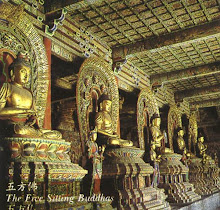
Author: Shantideva Bodhisattva (* Shantideva Bodhisattva is known as a direct disciple of Manjusri Bodhisattva)
The Key of becoming a Bodhisattva:
One who wishes to protect oneself and others quickly, should practice exchanging oneself for others, which is a great mystery.
All those who are unhappy in the world are so as a result of their desire for their own happiness.
All those who are happy in the world are so as a result of their desire for the happiness of others.
Enough of such talk!
Note the difference between the fool who seeks his own benefit, and the sage who works for the benefit of others.
One, who does not exchange his own happiness for the suffering of others, surely does not achieve Buddhahood. How could one find happiness even in the cycle of existence?
Therefore, in order to alleviate my own suffering and to alleviate the suffering of others, I give myself up to others, and I accept others as my own self.
--------------------------------------------------------------------------------
Chapter 1
Chapter 2
Chapter 3
Chapter 4
Chapter 5
Chapter 6
Chapter 7
Chapter 8
Chapter 9
[In copying this ancient manuscript we discovered various translations from different traditions. The reader can be comforted to know that they all agreed with one another in substance, however, some were easier to understand in places then others. In making this text available we worked hard to ensure that it would be comprehensible. In every case we selected the verse that we felt was easiest to understand. BIONA ED.]
-------------------------------------------------------------------------------------------------------------------
Chapter Six
The Perfection of Patience
1. Anger destroys all the good conduct, such as generosity and worshipping the Sugatas, which has been acquired over thousands of eons.
2. There is no vice like hatred, and there is no austerity like patience. Therefore, one should earnestly cultivate patience in various ways.
3. The mind does not find peace, nor does it enjoy pleasure and joy, nor does it find sleep or fortitude when the thorn of hatred dwells in the heart.
4. Even dependents whom one rewards with wealth and honors wish to harm the master who is repugnant due to his anger.
5. Even friends fear him. He saddens his friends. He attracts with generosity but is not served. In brief, there is nothing that can make an angry person happy.
6. One who recognized hatred as the enemy, knowing that it creates sufferings such as these, and persistently overcomes it, becomes happy in this world and in the other.
7. Finding its fuel in discontent originating from an undesired event and from an impediment to desired events, anger becomes inflamed and destroys me.
8. Therefore, I shall remove the fuel of that enemy, for that foe has no function other than to harm me.
9. Even if I fall into extreme adversity, I should not disrupt my happiness. When there is frustration, nothing is agreeable, and virtue is forsaken.
10. If there is a remedy, then what is the use of frustration? If there is no remedy, then what is the use of frustration?
11. For loved ones and for oneself, one does not desire suffering, contempt, verbal abuse, or disgrace; but for an enemy, it is the opposite.
12. Happiness is obtained with great difficulty, whereas suffering occurs easily. Only through suffering is there release from the cycle of existence. Therefore, O mind, be strong!
13. The devotees of Durga and the people of Karnata needlessly endure the pain of burns, cuts, and the like. Why then am I timid when my aim is liberation?
14. There is nothing whatsoever that remains difficult as one gets used to it. Thus, through habituation with slight pain, even great pain becomes bearable.
15. Do you not consider the pain of bugs, gadflies, and mosquitoes, of thirst and hunger, and the irritation of a serious rash and the like as insignificant?
16. Cold, heat, rain, wind, traveling, illness, captivity, and beatings should not induce a sense of fragility. Otherwise, the distress becomes greater.
17. Some, seeing their own blood, show extraordinary valor, while some faint even at the sight of others blood.
18. That comes from mental fortitude or from timidity. Therefore, one should become invincible to suffering, and surmount pain.
19. Not even in suffering should a wise person disrupt his mental serenity, for the battle is with the mental afflictions; in battle pain is easily obtained and there is much agony.
20. Courageous victors are dismissive of all suffering, and they conquer such enemies as hatred. The rest just kill corpses.
21. Suffering has another quality since arrogance diminishes because of despair, and ones feels compassion for beings in the cycle of existence, fear, and sin, and a yearning for the Jina.
22. I am not angered at bile and the like even though they cause great suffering. Why be angry at those who have minds? They too are impelled by conditions.
23. Just as sharp pain arises although one does not desire it, so anger forcibly arises although one does not desire it.
24. A person does not intentionally become angry, thinking, "I shall get angry," nor does anger originate, thinking, "I shall arise."
25. All offences and vices of various kinds arise under the influence of conditions, and they do not arise independently.
26. An assemblage of conditions does not have the intention, "I shall produce," nor does that which is produced have the intention, "I shall be produced."
27. That which is regarded as the Primal Substance and that which is construed as the Self do not originate, thinking, "I shall come into being."
28. Since it has not arisen, how could it wish to come into existence? Since it engages with objects, it cannot strive to cease either.
29. If the permanent self is not sentient, it is obviously inactive like space. Even in conjunction with conditions, what activity does the immutable have?
30. What is the use of action to the self, which at the time of action is the same as it was before? If the relationship is that it has action, then which of the two is the cause of the other?
31. Thus, everything is dependent on something else, and even that on which something is dependent is not autonomous. Hence, why would one get angry at things that are inactive, like apparitions?
32. Qualm: Averting anger is inappropriate, for who averts what? Response: That is appropriate, because it is a state of dependent origination and is considered to be the cessation of suffering.
33. Therefore, upon seeing a friend or an enemy committing a wrong deed, one should reflect, "Such are his conditions," and be at ease.
34. If all beings would find fulfillment according to their own wishes, then no one would suffer, for no one wishes to suffer.
35. People hurt themselves with thorns and the like out of negligence, with fasting and so on out of anger, and by desiring to obtain inaccessible women and so forth.
36. Some kill themselves by hanging, by jumping from cliffs, by eating poison or unwholesome substances, and by non-virtuous conduct.
37. When under the influence of mental afflictions, they kill even their own dear selves in this way; then how could they have restraint toward the bodies of others?
38. If you do not even have compassion toward those who, intoxicated by mental afflictions, commit suicide, then why does anger arise?
39. If inflicting harm on others is the nature of the foolish, then my anger toward them is as inappropriate as it would be toward fire, which has the nature of burning.
40. If this fault is advantageous and if sentient beings are good by nature, then anger toward them is as inappropriate as it would be toward pungent smoke in the sky.
41. Disregarding the principle of cause, such as a stick and the like, if I become angry with the one who impels it, then it is better if I hate hatred, because that person is also impelled by hatred.
42. In the past, I too have inflicted such pain on sentient beings; therefore, I, who have caused harm to sentient beings, deserve that in return.
43. Both his weapon and my body are causes of suffering. He has obtained a weapon, and I have obtained a body. With what should I be angry?
44. Blinded by craving, I have obtained this boil that appears as a human body, which cannot bear to be touched. When there is pain, with whom should one be angry?
45. I do not desire suffering; yet, fool that I am, I desire the cause of suffering. When suffering emerges due to my own fault, why should I be angry with anyone else?
46. Just as the forest of razor leaves and the birds of hell are brought into existence by my actions, so is this. With whom should I be angry?
47. Those who hurt me are impelled by my actions, as a result of which they will go to the infernal realms. Surely, it is I alone who have ruined them.
48. On account of them, many vices of mine diminish through forbearance. On account of me, they enter infernal realms with long lasting agonies.
49. It is I alone who harm them, and they are my benefactors. O Wicked mind, why do you misconstrue this and become angry?
50. If there is virtue in my intention, I will not enter the infernal realms. If I protect myself, what will happen to them here?
51. If I were to retaliate, they would not be protected and my conduct would be impaired. Because of that, those in anguish would be lost.
52. Because of its immateriality, the mind can never be harmed by anyone. However, due to its attachment to the body, the mind is tormented by suffering.
53. Neither contempt, abusive speech, nor disgrace harms the body. Why then, mind, O mind, do you become angry?
54. Will the unkindness of others toward me devour me in this life or another, that I am so adverse to it?
55. If I am adverse to it because it hinders my material gain, my acquisitions will vanish in this life, but my sin will surely remain.
56. It is better that I die today, than have a long, corrupt life. For even after living a long time, I shall have the suffering of death.
57. One person wakes up after enjoying a hundred years of pleasure in sleep, and another person wakes up after being happy for a moment.
58. Does happiness return to either once they have awakened? It is the same at the moment of death for one who lives a long time and for one who lives a short time.
59. Even though I have acquired many possessions and have enjoyed pleasures for a long time, I shall depart empty handed and naked as if I had been robbed.
60. What if I destroy vice and perform virtue while living off my acquisitions? Do vice and the destruction of virtue not occur for one who gets angry on account of material gains?
61. If the meaning of my life vanishes, then what is the point of a life that creates only non-virtue?
62. If you think that your hatred toward one who disparages you is because he dries away sentient beings, why does your anger not arise also when others are defamed in the same way?
63. You have patience toward those who are unkind because their ungracious behavior is directed toward someone else, but you do not have patience toward one who disparages you when he is subject to the arising of mental afflictions.
64. My hatred toward those who revile and violate images, stupas, and the sublime Dharma is wrong, because the Buddhas and the like are free of distress.
65. As in the preceding case, one should ward off anger toward those who injure spiritual mentors, relatives, and friends, by seeing this as arising from conditions.
66. Harm is certainly inflicted on beings either by sentient beings or non-sentient things. This distress is felt in a sentient being, so endure that pain.
67. Some do wrong out of delusion, while others, being deluded, become angry. Among them, whom do we call innocent, and whom do we call guilty?
68. Why did I previously act in such a way that now I am harmed by others? All are subject to their actions. Who am I to alter this?
69. Realizing this, I shall strive for virtues in such a way that all will have loving thoughts toward each other.
70. When fire spreads from one burning house to another, one should bundle up the straw and the like, take it out, and discard it.
71. Likewise, when the mind burns with the fire of hatred due to attachment, one should immediately cast it aside because of the fear of burning the body of merit.
72. If one who is to be executed has his hand amputated and is released, is this unfortunate? If a person is freed from hell by human suffering, is this unfortunate?
73. If one who is unable to endure even this slight suffering of the present, then why does one not ward off anger, which is the cause of pain in hell?
74. Thus, solely due to anger I have brought myself into hells thousands of times, and I have not brought about benefit for myself or others.
75. But this suffering is not of that kind, and it will bring about great benefit. Only delight in suffering that eliminates the suffering of the world is appropriate here.
76. If others find pleasure and joy in praising the abundance of someone's good qualities, why, O mind, do you not praise it and delight in this way, too?
77. This joy from your rejoicing is a blameless source of happiness. It is not prohibited by the victorious ones, and it is the most excellent way to attract others.
78. If you do not like it, thinking that it is a pleasure for that person only, then if you were to stop giving wages and the like, your seen and unseen reward would be destroyed.
79. When your own good qualities are being praised, you want others to rejoice as well. When good qualities of someone else are being praised, you do not want happiness even for your self.
80. Upon generating the Spirit of Awakening out of the desire for the happiness of all sentient beings, why are you angry at sentient beings now that they have found happiness themselves?
81. If you desire sentient beings' Buddhahood, which is worshipped in the three worlds, then why are you burned up when you see them slightly honored.
82. One who nurtures a person who you should nurture is making you a gift. Upon finding a person who supports your family, are you not delighted, but angry?
83. What does one who wishes Awakening for sentient beings not wish for them? How can one who becomes angry at others' prosperity have the Spirit of Awakening?
84. If someone does not receive that gift and if it remains in the house of the benefactor, then you do not have it anyway. So what use is it to you, whether it is given away or not?
85. Why would you have him ward off merits, kind people, and his own good qualities? Let him not accept when he is being given something? Say, at what are you angry?
86. Not only do you not repent for sins you have committed, but you also wish to compete with others who have performed virtues.
87. If something unpleasant happens to your enemy, would your satisfaction make it happen again? It would not happen merely due to your desire, without a cause.
88. Even if that suffering were brought about by your desire, why would you take delight in that? If you say it brings you satisfaction, what is worse than that?
89. Once I am snagged by this horrible fishhook cast by the fishermen, the mental afflictions, I will certainly be stewed in infernal cauldrons by the guardians of hell.
90. Praise, fame, and honor are not conducive to my merit, long life, strength, health, or physical well-being.
91. If I recognize my own self-interest, what good is there in that for me? If I want only mental pleasure, I should devote myself to gambling, drinking, and so on.
92. For the sake of fame, some sacrifice their wealth, and even kill themselves. Yet what good are words? When one dies, who has that pleasure?
93. At the loss of praise and fame, my own mind appears to me just like a child who wails in distress when its sandcastle is destroyed.
94. Since a word is not sentient, it cannot praise me. But knowing that someone likes me is a cause of my delight.
95. Whether it is for someone else or for me, what good to me is the affection of another? That joy of affection belongs only to that person. Not even a tiny fraction of that belongs to me.
96. If I take pleasure in that person's pleasure, then I should take it in every single case. Why am I am unhappy when others are made happy through their favor for some one else?
97. Therefore, it is because I am being praised that pleasure arises in me. But due to such absurdity, this is nothing more than the behavior of a child.
98. Praise and so on distract me and remove my disillusionment with the cycle of existence. They stir up jealousy toward gifted people, and anger at their success.
99. Therefore, are those conspiring to destroy my reputation and so forth not protecting me from falling into hell?
100. The bondage of acquisition and honor is unfitting for me who seeks liberation. How can I hate those who are freeing me from bondage?
101. How can I hate those who, as if due to the Buddha's blessing, block the gate as I seek to enter suffering?
102. It is wrong to feel anger toward someone, thinking that person impedes my merit. As there is no austerity equal to patience, shall I not abide in that?
103. If on account of my own fault I do not practice patience here, then I myself have created an obstacle when grounds for merit have been presented.
104. If one thing does not exist without another, and does exist when the other is present, then that other thing is its cause. How can that be called a hindrance?
105. For a supplicant is not a hindrance to generosity at the time of alms giving; and when a person who bestows an ordination arrives, he is not called a hindrance to the ordination.
106. Beggars are easy to meet in the world, but malefactors are difficult to find, for no one will wrong me when I do no wrong.
107. Therefore, since my adversary assists me in my Bodhisattva way of life, I should long for him like a treasure discovered in the house and acquired without effort.
108. Thus, he and I have obtained the fruit of patience. It should be given to him first, for patience is caused by him.
109. If an adversary does not deserve respect because his intention was not that I accomplish patience, then why is the sublime Dharma honored? It too has no intention to be a cause of that achievement.
110. If an adversary is not respected because his intention is to cause harm, then for what other reason would I have patience toward him, if he is like a physician who is intent on my well-being!
111. Thus patience arises only in dependence on that evil intention, so he alone is the cause of my patience. I should respect him just like the sublime Dharma.
112. The sage has declared that the field of sentient beings is the field of the Jinas, because many have reached the highest fulfillment by honoring them.
113. As the attainment of the Buddhas qualities is equally due to sentient beings and the Jinas, how is it that I do not respect sentient beings as I do the Jinas?
114. Their greatness is not in terms of their intention but in terms of the result itself. The greatness of sentient beings is comparable to that, so they are equal.
115. A friendly disposition, which is honorable, is the very greatness of sentient beings. The merit due to faith in the Buddhas is the very greatness of the Buddhas.
116. Therefore, sentient beings are equal to the Jinas in their share in the acquisition of the qualities of the Buddha; but none of them are equal to the Buddhas, who are oceans of good qualities with endless portions.
117. If even a minute good quality of those who are a unique collection of the essence of good qualities is found in someone, not even the three worlds would be enough to honor that one.
118. Because sentient beings have some portion of the superb qualities of the Buddha, it is right to honor sentient beings for just that similarity.
119. Apart from respecting sentient beings, what other repayment to true friends, the immeasurable benefactors, is possible?
120. The kindness of the Bodhisattvas, who sacrifice their lives and enter Avichi, is repaid by service to sentient beings, so even if sentient beings harm one, they are to be treated with kindness.
121. Why do I generate pride and not act like a servant toward those masters for whose sake my Lords have no regard for their own selves?
122. The sages are delighted with their joy, and they are not pleased if they are harmed; by pleasing them, all the sages are overjoyed, and to injure them is to injure the sages.
123. Just as there is no mental pleasure in all sensual gratification whatsoever when ones body is on fire, likewise there is no way for the compassionate ones to be happy when sentient beings are in pain.
124. Therefore, whatever displeasure I have brought to all the great compassionate ones by harming sentient beings, I confess that sin today. Thus, may I be forgiven by the sages whom I have displeased!
125. In order to please the Tath¨¢gatas, today with my entire being, I place myself in the service of the world. Let streams of people step on my head and strike me down. May the Protector of the World be pleased!
126. There is no doubt whatsoever that those Compassionate Beings regard all beings as themselves. Are they not seen as the Protectors in the form of sentient beings? Why then is there disrespect for them?
127. This alone is pleasing to the Tath¨¢gatas. This alone is the accomplishment of one's goal. This alone removes the suffering of the world. Therefore, let this alone be my resolve.
128. When some king's man tyrannized the populace, the farsighted among them cannot retaliate.
129. Because that man is not alone, and his power is the kings power. So one should not disparage any weak person who has done wrong,
130. Since his power is the guardians of hell and the Compassionate Ones. Therefore, one should please sentient beings, just as a servant would a hot-tempered king.
131. What could an angry king do that would equal the anguish of hell, experienced as a result of inflicting mental pain on sentient beings?
132. What could a gratified king give that would equal Buddhahood, experienced as a result of delighting sentient beings?
133. Let alone future Buddhahood, do you not see that in this life, fortune, fame, and happiness ensue from pleasing sentient beings?
134. While transmigrating, a patient person, with beauty, health, charisma, and so forth, achieves longevity and the abundant joy of a Cakravati.
------------------------------------------------------------
Continue to Chapter Seven - The Perfection of Zeal
------------------------------------------------------------
Showing posts with label Suffering. Show all posts
Showing posts with label Suffering. Show all posts
Saturday, May 21, 2011


Sunday, December 26, 2010
A Guide To the Bodhisattva Way Of Life - Chapter Four
Author: Shantideva Bodhisattva
(* Shantideva Bodhisattva is known as a direct disciple of Manjusri Bodhisattva)
The Key of becoming a Bodhisattva:
One who wishes to protect oneself and others quickly, should practice exchanging oneself for others, which is a great mystery.
All those who are unhappy in the world are so as a result of their desire for their own happiness.
All those who are happy in the world are so as a result of their desire for the happiness of others.
Enough of such talk!
Note the difference between the fool who seeks his own benefit, and the sage who works for the benefit of others.
One, who does not exchange his own happiness for the suffering of others, surely does not achieve Buddhahood. How could one find happiness even in the cycle of existence?
Therefore, in order to alleviate my own suffering and to alleviate the suffering of others, I give myself up to others, and I accept others as my own self.
--------------------------------------------------------------------------------
Chapter 1
Chapter 2
Chapter 3
Chapter 4
Chapter 5
Chapter 6
Chapter 7
Chapter 8
Chapter 9
[In copying this ancient manuscript we discovered various translations from different traditions. The reader can be comforted to know that they all agreed with one another in substance, however, some were easier to understand in places then others. In making this text available we worked hard to ensure that it would be comprehensible. In every case we selected the verse that we felt was easiest to understand. BIONA ED.]
--------------------------------------------------------------------------------
Chapter Four
Attending to the Spirit of Awakening
1. Thus, upon firmly adopting the spirit of awakening, a child of the Jinas should always vigilantly strive not to neglect his training.
2. Although one has made a commitment, it is appropriate to reconsider whether or not to do that which has been rashly undertaken and has not been well considered.
3. But shall I discard that which has been examined by the sagacious Buddhas and their children, as well as by myself according to the best of my abilities?
4. If, upon making such a promise, I do not put it into action, then having deceived those sentient beings, what destiny shall I have?
5. It has been said that a person who intended to give away even a tiny thing but does not do so, becomes a preta.
6. Then all the more so, having deceived the entire world after loudly and sincerely inviting it to unsurpassable happiness, what state of existence shall I have?
7. Only the Omniscient One knows the inconceivable course of action of those people whom he liberates even when they forsake the spirit of awakening.
8. Therefore, for a Bodhisattva it is the heaviest downfall of all; for if he commits such a downfall, he impairs the welfare of all sentient beings.
9. If someone else hinders his virtue, even for a moment, there will be no end to his miserable states of existence, because he diminishes the welfare of sentient beings.
10. One would be destroyed, obliterating the well being of even one sentient being, how much more so of beings dwelling throughout all space?
11. Thus, due to the power of the downfalls and due to the power of the Spirit of Awakening, one revolving in the cycle of existence is slow in the attaining of bodhisattva grounds.
12. Therefore, I should respectfully act in accordance with my commitment. If I do not make an effort now, I shall go from lower to lower states.
13. Innumerable Buddhas have gone by, seeking out every sentient being, but through my own fault, I have not come into the domain of their cure.
14. If I remain like this, as I am now, I will repeatedly come to the miserable states of existence, illness, death, amputation, destruction and the like.
15. When shall I encounter the extremely rare appearance of the Tath¨¢gata, faith, human existence, and the ability to practice virtue,
16. Health, daily sustenance, and lack of adversity? Life is momentary and deceptive; and the body is as if on loan.
17. With such behavior on my part, a human state is certainly not obtained again. When a human state is not achieved there is only vice, and how could there be blessing?
18. If I do not perform virtue even when I am capable of it, what then shall I do when fully dazed by the sufferings of miserable states of existence?
19. For one does not perform virtue but accumulates sin, even the expression, "favorable state of existence" will be lost for a thousand million eons.
20. Therefore, the blessed one stated that human existence is extremely difficult to obtain, like a turtles head emerging into the ring of a yoke in a vast ocean.
21. One dwells in the Avichi Hell for an eon as a consequence of a vice committed in a single moment. What then can be said of a favorable state of existence, since sin has accumulated since beginning-less time?
22. Having experienced that alone, one is still not liberated. Therefore, while experiencing it, one begets more vices.
23. Upon obtaining such leisure, if I do not practice virtue, then there is no duplicity greater than this, and there is no delusion greater than this.
24. If I recognize this and, still deluded, fall into sloth, then when I am commanded by the messengers of Yama, I shall long remain in great anguish.
25. The unendurable fire of hell will scorch my body for ages, and afterward the fire of remorse will torment my undisciplined mind for a long time.
26. I have somehow obtained the advantageous state that is very difficult to achieve, and though aware of that, I am led back to those same hells.
27. I have no will in this matter, as if bewitched by spells. I do not know by whom I am bewitched or who dwells inside me.
28. Enemies such as craving and hatred are without arms, legs, and so on. They are neither courageous nor wise. How is it that they have enslaved me?
29. Stationed in my mind, they ruin me, while remaining well established themselves; and yet I do not get angry at my forbearance with this shameful and improper situation.
30. If all gods and humans were my enemies, even they would be unable to bring me to the fire of the Avichi Hell.
31. When encountered, it consumes even the ashes of Mount Meru. Mental afflictions, the mighty enemies, instantly throw me there.
32. For the longevity of all other enemies is not so enduring, beginning-less, and endless as that of my enemies, the mental afflictions.
33. Everyone becomes favorably disposed when tended with kindness, but when these mental afflictions are honored, they bring about suffering all the more.
34. How can I take delight in the cycle of existence when constant, long lasting enemies, who are the sole cause of the currents and floods of adversities, fearlessly dwell in my heart?
35. How can I be happy if the guardians of the prison of the cycle of existence, these murderers and slaughterers in hells and the like, remain in the cage of greed within the dwelling of my heart?
36. Therefore, as long as these enemies are not destroyed before my eyes, I shall not forsake my task. Those lofty with pride, who are enraged at someone who gives them even a minor insult, will not sleep until they kill him.
37. At the height of a battle, ready to slaughter those who are in darkness and who are naturally subject to suffering through death, those afflicted with injuries from countless spears and arrows do not turn back without accomplishing their goal.
38. What then when I am eager to destroy my natural enemies, which are the perpetual causes of all miseries? Today, even if I am beset with a hundred adversities, why am I weary and despondent?
39. If they wear scars from their enemies for no reason as if they were ornaments, then why do sufferings trouble me when I am set to accomplish a great goal?
40. If fishermen, outcasts, farmers, and others, whose minds are fixed merely on their own livelihoods, withstand the adversities of cold and heat, then why do I not endure for the sake the well being of the world?
41. While I have promised to liberate beings throughout space in the ten directions from their mental afflictions, I have not liberated even myself from the mental afflictions.
42. Without knowing my own limitations, I spoke at that time as if I were a bit insane. Therefore, I shall never turn back from vanquishing mental afflictions.
43. I shall be tenacious in this matter; and fixed on revenge, I shall wage war, except against those mental afflictions that are related to the elimination of mental afflictions.
44. Let my entrails ooze out and my head fall off, but by no means shall I bow down to my enemies, the mental afflictions.
45. Even if exiled, an enemy may acquire a residence and followers in another country whence he returns with his full strength. But there is no such course for my enemy, the mental afflictions.
46. Once the afflictions that dwell in my mind have been expelled, where could it go, and where would it go, and where would it rest and attempt to return and destroy me? Feeble in spirit, I am lacking in perseverance. Mental afflictions are frail and conquerable with the eye of wisdom.
47. Mental afflictions do not exist in sense objects, or in sense faculties, or in the space between, and not anywhere else. Then where do they exist and agitate the whole world? This is an illusion only. Liberate your fearing heart and cultivate perseverance for the sake of wisdom. Why would you torture yourself in hells for no reason?
48. After pondering in this way, I shall make an effort to apply the teachings as they have been explained. How can someone who could be cured by medicine be restored to health if he strays from the physician's advice?
------------------------------------------------------------
Continue to Chapter Five - Guarding Introspection
------------------------------------------------------------------------
(* Shantideva Bodhisattva is known as a direct disciple of Manjusri Bodhisattva)
The Key of becoming a Bodhisattva:
One who wishes to protect oneself and others quickly, should practice exchanging oneself for others, which is a great mystery.
All those who are unhappy in the world are so as a result of their desire for their own happiness.
All those who are happy in the world are so as a result of their desire for the happiness of others.
Enough of such talk!
Note the difference between the fool who seeks his own benefit, and the sage who works for the benefit of others.
One, who does not exchange his own happiness for the suffering of others, surely does not achieve Buddhahood. How could one find happiness even in the cycle of existence?
Therefore, in order to alleviate my own suffering and to alleviate the suffering of others, I give myself up to others, and I accept others as my own self.
--------------------------------------------------------------------------------
Chapter 1
Chapter 2
Chapter 3
Chapter 4
Chapter 5
Chapter 6
Chapter 7
Chapter 8
Chapter 9
[In copying this ancient manuscript we discovered various translations from different traditions. The reader can be comforted to know that they all agreed with one another in substance, however, some were easier to understand in places then others. In making this text available we worked hard to ensure that it would be comprehensible. In every case we selected the verse that we felt was easiest to understand. BIONA ED.]
--------------------------------------------------------------------------------
Chapter Four
Attending to the Spirit of Awakening
1. Thus, upon firmly adopting the spirit of awakening, a child of the Jinas should always vigilantly strive not to neglect his training.
2. Although one has made a commitment, it is appropriate to reconsider whether or not to do that which has been rashly undertaken and has not been well considered.
3. But shall I discard that which has been examined by the sagacious Buddhas and their children, as well as by myself according to the best of my abilities?
4. If, upon making such a promise, I do not put it into action, then having deceived those sentient beings, what destiny shall I have?
5. It has been said that a person who intended to give away even a tiny thing but does not do so, becomes a preta.
6. Then all the more so, having deceived the entire world after loudly and sincerely inviting it to unsurpassable happiness, what state of existence shall I have?
7. Only the Omniscient One knows the inconceivable course of action of those people whom he liberates even when they forsake the spirit of awakening.
8. Therefore, for a Bodhisattva it is the heaviest downfall of all; for if he commits such a downfall, he impairs the welfare of all sentient beings.
9. If someone else hinders his virtue, even for a moment, there will be no end to his miserable states of existence, because he diminishes the welfare of sentient beings.
10. One would be destroyed, obliterating the well being of even one sentient being, how much more so of beings dwelling throughout all space?
11. Thus, due to the power of the downfalls and due to the power of the Spirit of Awakening, one revolving in the cycle of existence is slow in the attaining of bodhisattva grounds.
12. Therefore, I should respectfully act in accordance with my commitment. If I do not make an effort now, I shall go from lower to lower states.
13. Innumerable Buddhas have gone by, seeking out every sentient being, but through my own fault, I have not come into the domain of their cure.
14. If I remain like this, as I am now, I will repeatedly come to the miserable states of existence, illness, death, amputation, destruction and the like.
15. When shall I encounter the extremely rare appearance of the Tath¨¢gata, faith, human existence, and the ability to practice virtue,
16. Health, daily sustenance, and lack of adversity? Life is momentary and deceptive; and the body is as if on loan.
17. With such behavior on my part, a human state is certainly not obtained again. When a human state is not achieved there is only vice, and how could there be blessing?
18. If I do not perform virtue even when I am capable of it, what then shall I do when fully dazed by the sufferings of miserable states of existence?
19. For one does not perform virtue but accumulates sin, even the expression, "favorable state of existence" will be lost for a thousand million eons.
20. Therefore, the blessed one stated that human existence is extremely difficult to obtain, like a turtles head emerging into the ring of a yoke in a vast ocean.
21. One dwells in the Avichi Hell for an eon as a consequence of a vice committed in a single moment. What then can be said of a favorable state of existence, since sin has accumulated since beginning-less time?
22. Having experienced that alone, one is still not liberated. Therefore, while experiencing it, one begets more vices.
23. Upon obtaining such leisure, if I do not practice virtue, then there is no duplicity greater than this, and there is no delusion greater than this.
24. If I recognize this and, still deluded, fall into sloth, then when I am commanded by the messengers of Yama, I shall long remain in great anguish.
25. The unendurable fire of hell will scorch my body for ages, and afterward the fire of remorse will torment my undisciplined mind for a long time.
26. I have somehow obtained the advantageous state that is very difficult to achieve, and though aware of that, I am led back to those same hells.
27. I have no will in this matter, as if bewitched by spells. I do not know by whom I am bewitched or who dwells inside me.
28. Enemies such as craving and hatred are without arms, legs, and so on. They are neither courageous nor wise. How is it that they have enslaved me?
29. Stationed in my mind, they ruin me, while remaining well established themselves; and yet I do not get angry at my forbearance with this shameful and improper situation.
30. If all gods and humans were my enemies, even they would be unable to bring me to the fire of the Avichi Hell.
31. When encountered, it consumes even the ashes of Mount Meru. Mental afflictions, the mighty enemies, instantly throw me there.
32. For the longevity of all other enemies is not so enduring, beginning-less, and endless as that of my enemies, the mental afflictions.
33. Everyone becomes favorably disposed when tended with kindness, but when these mental afflictions are honored, they bring about suffering all the more.
34. How can I take delight in the cycle of existence when constant, long lasting enemies, who are the sole cause of the currents and floods of adversities, fearlessly dwell in my heart?
35. How can I be happy if the guardians of the prison of the cycle of existence, these murderers and slaughterers in hells and the like, remain in the cage of greed within the dwelling of my heart?
36. Therefore, as long as these enemies are not destroyed before my eyes, I shall not forsake my task. Those lofty with pride, who are enraged at someone who gives them even a minor insult, will not sleep until they kill him.
37. At the height of a battle, ready to slaughter those who are in darkness and who are naturally subject to suffering through death, those afflicted with injuries from countless spears and arrows do not turn back without accomplishing their goal.
38. What then when I am eager to destroy my natural enemies, which are the perpetual causes of all miseries? Today, even if I am beset with a hundred adversities, why am I weary and despondent?
39. If they wear scars from their enemies for no reason as if they were ornaments, then why do sufferings trouble me when I am set to accomplish a great goal?
40. If fishermen, outcasts, farmers, and others, whose minds are fixed merely on their own livelihoods, withstand the adversities of cold and heat, then why do I not endure for the sake the well being of the world?
41. While I have promised to liberate beings throughout space in the ten directions from their mental afflictions, I have not liberated even myself from the mental afflictions.
42. Without knowing my own limitations, I spoke at that time as if I were a bit insane. Therefore, I shall never turn back from vanquishing mental afflictions.
43. I shall be tenacious in this matter; and fixed on revenge, I shall wage war, except against those mental afflictions that are related to the elimination of mental afflictions.
44. Let my entrails ooze out and my head fall off, but by no means shall I bow down to my enemies, the mental afflictions.
45. Even if exiled, an enemy may acquire a residence and followers in another country whence he returns with his full strength. But there is no such course for my enemy, the mental afflictions.
46. Once the afflictions that dwell in my mind have been expelled, where could it go, and where would it go, and where would it rest and attempt to return and destroy me? Feeble in spirit, I am lacking in perseverance. Mental afflictions are frail and conquerable with the eye of wisdom.
47. Mental afflictions do not exist in sense objects, or in sense faculties, or in the space between, and not anywhere else. Then where do they exist and agitate the whole world? This is an illusion only. Liberate your fearing heart and cultivate perseverance for the sake of wisdom. Why would you torture yourself in hells for no reason?
48. After pondering in this way, I shall make an effort to apply the teachings as they have been explained. How can someone who could be cured by medicine be restored to health if he strays from the physician's advice?
------------------------------------------------------------
Continue to Chapter Five - Guarding Introspection
------------------------------------------------------------------------
Tuesday, December 14, 2010
A Guide To the Bodhisattva Way Of Life - Chapter Three
Author: Shantideva Bodhisattva
(* Shantideva Bodhisattva is known as a direct disciple of Manjusri Bodhisattva)
The Key of becoming a Bodhisattva:
One who wishes to protect oneself and others quickly, should practice exchanging oneself for others, which is a great mystery.
All those who are unhappy in the world are so as a result of their desire for their own happiness.
All those who are happy in the world are so as a result of their desire for the happiness of others.
Enough of such talk!
Note the difference between the fool who seeks his own benefit, and the sage who works for the benefit of others.
One, who does not exchange his own happiness for the suffering of others, surely does not achieve Buddhahood. How could one find happiness even in the cycle of existence?
Therefore, in order to alleviate my own suffering and to alleviate the suffering of others, I give myself up to others, and I accept others as my own self.
--------------------------------------------------------------------------------
Chapter 1
Chapter 2
Chapter 3
Chapter 4
Chapter 5
Chapter 6
Chapter 7
Chapter 8
Chapter 9
[In copying this ancient manuscript we discovered various translations from different traditions. The reader can be comforted to know that they all agreed with one another in substance, however, some were easier to understand in places then others. In making this text available we worked hard to ensure that it would be comprehensible. In every case we selected the verse that we felt was easiest to understand. BIONA ED.]
--------------------------------------------------------------------------------
Chapter Three
Adopting the Spirit of Awakening
1. I happily rejoice in the virtue of all sentient beings, which relieves the suffering of the miserable states of existence. May those who suffer dwell in happiness!
2. I rejoice in sentient beings' liberation from the suffering of the cycle of existence, and I rejoice in the Protectors' Bodhisattva Hood and Buddhahood.
3. I rejoice in the teachers' oceanic expressions of the spirit of awakening, which delight and benefit all sentient beings.
4. With the folded hands I beseech the Fully Awakened Ones in all directions that they may kindle the light of Dharma for those who fall into suffering owing to confusion.
5. With folded hands I supplicate the Jinas who wish to leave for Nirvana that they may stay for countless eons, and that this world may not remain in darkness.
6. May the virtue that I have acquired by doing all this relieve every suffering of sentient beings!
7. May I be the medicine and the physician for the sick. May I be their nurse until their illness never recurs!
8. With showers of food and drink may I overcome the afflictions of hunger and thirst! May I become food and drink during times of famine.
9. May I be an inexhaustible treasury for the destitute! With various forms of assistance may I remain in their presence.
10. For the sake of accomplishing the welfare of all sentient beings, I freely give up my body, enjoyments, and all my virtues of the three times.
11. Surrendering everything is Nirvana, and my mind seeks Nirvana. If I must surrender everything, it is better that I give it to sentient beings.
12. For the sake of all beings I have made this body pleasure less. Let them continually beat it, revile it, and cover it with filth.
13. Let them play with my body. Let them laugh at it and ridicule it. What does it matter to me? I have given my body to them.
14. Let them have me perform deeds that are conductive to their happiness. Whoever resorts to me, may it never be in vain.
15. For those who have resorted to me and have an angry or unkind thought, may even that always become the cause for their accomplishing every goal.
16. May those who falsely accuse me, who harm me, and who ridicule me all partake of awakening!
17. May I be a protector for those who are without protectors, a guide for travelers, and a boat, a bridge, and a ship for those who wish to cross over!
18. May I be a lamp for those who seek light, a bed for those who seek rest, and may I be a servant for all beings who desire a servant.
19. To all sentient beings may I be a wish-fulfilling gem, a vase of good fortune, an efficacious mantra, a great medication, a wish-fulfilling tree, and a wish-granting cow.
20. Just as earth and other elements are useful in various ways to innumerable sentient beings dwelling throughout infinite space,
21. So may I be in various ways a source of life for the sentient beings present throughout space until they are liberated.
22. Just as the Sugatas of old adopted the spirit of awakening, and just as they properly conformed to the practice of the Bodhisattvas,
23. So I myself shall generate the spirit of awakening for the sake of the world; and so I myself shall properly engage in those practices.
24. Upon gladly adopting the spirit of awakening in this way, an intelligent person should thus nurture the spirit in order to fulfill his wish.
25. Now my life is fruitful. Human existence is well obtained. Today I have been born into the family of the Buddhas. Now I am a child of the Buddha.
26. Thus, whatever I do now should accord with the Bodhisattvas' family, and it should not be a stain on this pure family.
27. Just as a blind man might find a jewel amongst heaps of rubbish, so this spirit of Awakening has somehow arisen in me.
28. It is the elixir of life produced to vanquish death in the world. It is an inexhaustible treasure eliminating the poverty of the world.
29. It is the supreme medicine that alleviates the illness of the world. It is the tree of rest for beings exhausted from wondering on the pathways of mundane existence.
30. It is the universal bridge for all travelers on their crossing over miserable states of existence. It is the rising moon of the mind that soothes the mental afflictions of the world.
31. It is the great sun dispelling the darkness of the world's ignorance. It is the fresh butter formed from churning the milk of Dharma.
32. For the caravan of beings traveling on the path to mundane existence and starving for the meal of happiness, it is the feast of happiness that satisfies all sentient beings who have come as guests.
33. Today I invite the world to Sugata-hood and temporal happiness. May the gods, asuras, and other rejoice in the presence of all the Protectors!
(* Shantideva Bodhisattva is known as a direct disciple of Manjusri Bodhisattva)
The Key of becoming a Bodhisattva:
One who wishes to protect oneself and others quickly, should practice exchanging oneself for others, which is a great mystery.
All those who are unhappy in the world are so as a result of their desire for their own happiness.
All those who are happy in the world are so as a result of their desire for the happiness of others.
Enough of such talk!
Note the difference between the fool who seeks his own benefit, and the sage who works for the benefit of others.
One, who does not exchange his own happiness for the suffering of others, surely does not achieve Buddhahood. How could one find happiness even in the cycle of existence?
Therefore, in order to alleviate my own suffering and to alleviate the suffering of others, I give myself up to others, and I accept others as my own self.
--------------------------------------------------------------------------------
Chapter 1
Chapter 2
Chapter 3
Chapter 4
Chapter 5
Chapter 6
Chapter 7
Chapter 8
Chapter 9
[In copying this ancient manuscript we discovered various translations from different traditions. The reader can be comforted to know that they all agreed with one another in substance, however, some were easier to understand in places then others. In making this text available we worked hard to ensure that it would be comprehensible. In every case we selected the verse that we felt was easiest to understand. BIONA ED.]
--------------------------------------------------------------------------------
Chapter Three
Adopting the Spirit of Awakening
1. I happily rejoice in the virtue of all sentient beings, which relieves the suffering of the miserable states of existence. May those who suffer dwell in happiness!
2. I rejoice in sentient beings' liberation from the suffering of the cycle of existence, and I rejoice in the Protectors' Bodhisattva Hood and Buddhahood.
3. I rejoice in the teachers' oceanic expressions of the spirit of awakening, which delight and benefit all sentient beings.
4. With the folded hands I beseech the Fully Awakened Ones in all directions that they may kindle the light of Dharma for those who fall into suffering owing to confusion.
5. With folded hands I supplicate the Jinas who wish to leave for Nirvana that they may stay for countless eons, and that this world may not remain in darkness.
6. May the virtue that I have acquired by doing all this relieve every suffering of sentient beings!
7. May I be the medicine and the physician for the sick. May I be their nurse until their illness never recurs!
8. With showers of food and drink may I overcome the afflictions of hunger and thirst! May I become food and drink during times of famine.
9. May I be an inexhaustible treasury for the destitute! With various forms of assistance may I remain in their presence.
10. For the sake of accomplishing the welfare of all sentient beings, I freely give up my body, enjoyments, and all my virtues of the three times.
11. Surrendering everything is Nirvana, and my mind seeks Nirvana. If I must surrender everything, it is better that I give it to sentient beings.
12. For the sake of all beings I have made this body pleasure less. Let them continually beat it, revile it, and cover it with filth.
13. Let them play with my body. Let them laugh at it and ridicule it. What does it matter to me? I have given my body to them.
14. Let them have me perform deeds that are conductive to their happiness. Whoever resorts to me, may it never be in vain.
15. For those who have resorted to me and have an angry or unkind thought, may even that always become the cause for their accomplishing every goal.
16. May those who falsely accuse me, who harm me, and who ridicule me all partake of awakening!
17. May I be a protector for those who are without protectors, a guide for travelers, and a boat, a bridge, and a ship for those who wish to cross over!
18. May I be a lamp for those who seek light, a bed for those who seek rest, and may I be a servant for all beings who desire a servant.
19. To all sentient beings may I be a wish-fulfilling gem, a vase of good fortune, an efficacious mantra, a great medication, a wish-fulfilling tree, and a wish-granting cow.
20. Just as earth and other elements are useful in various ways to innumerable sentient beings dwelling throughout infinite space,
21. So may I be in various ways a source of life for the sentient beings present throughout space until they are liberated.
22. Just as the Sugatas of old adopted the spirit of awakening, and just as they properly conformed to the practice of the Bodhisattvas,
23. So I myself shall generate the spirit of awakening for the sake of the world; and so I myself shall properly engage in those practices.
24. Upon gladly adopting the spirit of awakening in this way, an intelligent person should thus nurture the spirit in order to fulfill his wish.
25. Now my life is fruitful. Human existence is well obtained. Today I have been born into the family of the Buddhas. Now I am a child of the Buddha.
26. Thus, whatever I do now should accord with the Bodhisattvas' family, and it should not be a stain on this pure family.
27. Just as a blind man might find a jewel amongst heaps of rubbish, so this spirit of Awakening has somehow arisen in me.
28. It is the elixir of life produced to vanquish death in the world. It is an inexhaustible treasure eliminating the poverty of the world.
29. It is the supreme medicine that alleviates the illness of the world. It is the tree of rest for beings exhausted from wondering on the pathways of mundane existence.
30. It is the universal bridge for all travelers on their crossing over miserable states of existence. It is the rising moon of the mind that soothes the mental afflictions of the world.
31. It is the great sun dispelling the darkness of the world's ignorance. It is the fresh butter formed from churning the milk of Dharma.
32. For the caravan of beings traveling on the path to mundane existence and starving for the meal of happiness, it is the feast of happiness that satisfies all sentient beings who have come as guests.
33. Today I invite the world to Sugata-hood and temporal happiness. May the gods, asuras, and other rejoice in the presence of all the Protectors!
Saturday, December 4, 2010
A Guide To the Bodhisattva Way Of Life - Chapter One
A Guide To the Bodhisattva Way Of Life
Author: Shantideva Bodhisattva
(* Shantideva Bodhisattva is known as a direct disciple of Manjusri Bodhisattva)
The Key of becoming a Bodhisattva:
One who wishes to protect oneself and others quickly, should practice exchanging oneself for others, which is a great mystery.
All those who are unhappy in the world are so as a result of their desire for their own happiness.
All those who are happy in the world are so as a result of their desire for the happiness of others.
Enough of such talk!
Note the difference between the fool who seeks his own benefit, and the sage who works for the benefit of others.
One, who does not exchange his own happiness for the suffering of others, surely does not achieve Buddhahood. How could one find happiness even in the cycle of existence?
Therefore, in order to alleviate my own suffering and to alleviate the suffering of others, I give myself up to others, and I accept others as my own self.
--------------------------------------------------------------------------------
Chapter 1
Chapter 2
Chapter 3
Chapter 4
Chapter 5
Chapter 6
Chapter 7
Chapter 8
Chapter 9
[In copying this ancient manuscript we discovered various translations from different traditions. The reader can be comforted to know that they all agreed with one another in substance, however, some were easier to understand in places then others. In making this text available we worked hard to ensure that it would be comprehensible. In every case we selected the verse that we felt was easiest to understand. BIONA ED.]
--------------------------------------------------------------------------------
Chapter One
The Benefit of the Spirit of Awakening (The Benefit of the Bodhi Heart)
1. Reverently bowing to the Sugatas, who are endowed with the Dharmakaya, together with their children and all who are worthy of veneration, I shall concisely present a guide to the discipline of the children of the Sugatas in accordance with the scriptures.
2. There is nothing here that has not been said before, nor do I have any skill in composition. Thus, I have no concern for the welfare of others, and I have composed this solely to season my own mind.
3. Owing to this, the power of my faith increases to cultivate virtue. Moreover, if someone else with a disposition like my own examines this, it may be meaningful.
4. This leisure and endowment, which are so difficult to obtain have been acquired, and they bring about the welfare of the world. If one fails to take this favorable opportunity into consideration, how could this occasion occur again?
5. Just as lightning illuminates the darkness of a cloudy night for an instant, in the same way, by the power of the Buddha, occasionally people's minds are momentarily inclined toward merit.
6. Thus, virtue is perpetually ever so feeble, while the power of vice is great and extremely dreadful. If there were no spirit of perfect awakening, what other virtue would overcome it?
7. The Lords of Sages, who have been contemplating for many eons, have seen this alone as a blessing by which joy is easily increased and immeasurable multitudes of beings are rescued.
8. Those who long to overcome the abundant miseries of mundane existence, those who wish to dispel the adversities of sentient beings, and those who yearn to experience a myriad of joys should never forsake the spirit of awakening.
9. When the spirit of awakening has arisen, in an instant a wretch who is bound in the prison of the cycle of existence is called a child of the Sugatas and becomes worthy of reverence in the worlds of gods and humans.
10. Upon taking this impure form, it transmutes it into the priceless image of the gem of the Jina. So, firmly hold to the quicksilver elixir, called the spirit of awakening, which must be utterly transmuted.
11. The world's sole leaders, whose minds are fathomless, have well examined its great value. You, who are inclined to escape from the states of mundane existence, hold fast to the jewel of the spirit of awakening.
12. Just as a plantain tree decays upon losing its fruit, so does every other virtue wane. But the tree of the spirit of awakening perpetually bears fruit, does not decay, and only flourishes.
13. Owing to its protection, as due to the protection of a powerful man, even after committing horrendous vices, one immediately overcomes great fears. Why do ignorant beings not seek refuge in it?
14. Like the conflagration at the time of the destruction of the universe, it consumes great ices in an instant. The wise lord Maitreya taught its incalculable benefits to Sudhana.
15. In brief, this spirit of awakening is known to be of two kinds: the spirit of awakening, and the spirit of aspiring for awakening, and the spirit of venturing towards awakening.
16. Just as one perceives the difference between a person who yearns to travel and a traveler, so do the learned recognize the corresponding difference between those two.
17. Although the result of the spirit of aspiring for awakening is great within the cycle of existence, it is still not like the continual state of merit of the spirit of venturing.
18. From the time that one adopts that spirit with an irreversible attitude for the sake of liberating limitless sentient beings,
19. From that moment on, an uninterrupted stream of merit, equal to the sky, constantly arises even when one is asleep or distracted.
20. The Tath¨¢gata himself cogently asserted this in the Subahuprccha for the sake of beings who are inclined toward the lesser vehicle.
21. A well-intentioned person who thinks, "I shall eliminate the headaches of sentient beings," bears immeasurable merit.
22. When then of a person who desires to remove the incomparable pain of every single being and endow them with immeasurable good qualities?
23. Who has even a mother or father with such altruism? Would the gods, sages, or Brahmas have it?
24. If those beings have never before had that wish for their own sake even in their dreams, how could they possibly have it for the sake of others?
25. How does this unprecedented and distinguished jewel, whose desire for the benefit of others does not arise in others even for their own self-interest, come into existence?
26. How can one measure the merit of the jewel of the mind, which is the seed of the worlds joy and is the remedy for the worlds suffering?
27. If reverence for the Buddhas is exceeded merely by an altruistic intention, how much more so by striving for the complete happiness of all sentient beings?
28. Those desiring to escape from suffering hasten right toward suffering. With the very desire for happiness, out of delusion they destroy their own happiness as if it were an enemy.
29. He satisfies with all joys those who are starving for happiness and eliminates all the sorrows of those who are afflicted in many ways.
30. He dispels delusion. Where else is there such a saint? Where else is there such a friend? Where else is there such merit?
31. Even one who repays a kind deed is praised somewhat, so what should be said of a bodhisattva whose good deed is unsolicited?
32. The world honors as virtuous one who makes a gift to a few people, even if it is merely a momentary and contemptuous donation of plain food and support for half a day.
33. What then of one who forever bestows to countless sentient beings the fulfillment of all yearnings, which is inexhaustible until the end of beings as limitless as space?
34. The Lord declared, "One who brings forth an impure thought in his heart against a benefactor, a child, of the Jina, will dwell in hells for as many eons as there were impure thoughts.
35. But if ones mind is kindly inclined, one will bring forth an even greater fruit. Even when a greatly violent crime is committed against the children of the Jinas, their virtue spontaneously arises.
36. I pay homage to the bodies of those whom this precious jewel of the mind has arisen. I go for refuge to those who are mines of joy, toward whom even an offence results in happiness.
...to be continue...
...Chapter Two: The Confession of Sin
---------------------------------------------------
Author: Shantideva Bodhisattva
(* Shantideva Bodhisattva is known as a direct disciple of Manjusri Bodhisattva)
The Key of becoming a Bodhisattva:
One who wishes to protect oneself and others quickly, should practice exchanging oneself for others, which is a great mystery.
All those who are unhappy in the world are so as a result of their desire for their own happiness.
All those who are happy in the world are so as a result of their desire for the happiness of others.
Enough of such talk!
Note the difference between the fool who seeks his own benefit, and the sage who works for the benefit of others.
One, who does not exchange his own happiness for the suffering of others, surely does not achieve Buddhahood. How could one find happiness even in the cycle of existence?
Therefore, in order to alleviate my own suffering and to alleviate the suffering of others, I give myself up to others, and I accept others as my own self.
--------------------------------------------------------------------------------
Chapter 1
Chapter 2
Chapter 3
Chapter 4
Chapter 5
Chapter 6
Chapter 7
Chapter 8
Chapter 9
[In copying this ancient manuscript we discovered various translations from different traditions. The reader can be comforted to know that they all agreed with one another in substance, however, some were easier to understand in places then others. In making this text available we worked hard to ensure that it would be comprehensible. In every case we selected the verse that we felt was easiest to understand. BIONA ED.]
--------------------------------------------------------------------------------
Chapter One
The Benefit of the Spirit of Awakening (The Benefit of the Bodhi Heart)
1. Reverently bowing to the Sugatas, who are endowed with the Dharmakaya, together with their children and all who are worthy of veneration, I shall concisely present a guide to the discipline of the children of the Sugatas in accordance with the scriptures.
2. There is nothing here that has not been said before, nor do I have any skill in composition. Thus, I have no concern for the welfare of others, and I have composed this solely to season my own mind.
3. Owing to this, the power of my faith increases to cultivate virtue. Moreover, if someone else with a disposition like my own examines this, it may be meaningful.
4. This leisure and endowment, which are so difficult to obtain have been acquired, and they bring about the welfare of the world. If one fails to take this favorable opportunity into consideration, how could this occasion occur again?
5. Just as lightning illuminates the darkness of a cloudy night for an instant, in the same way, by the power of the Buddha, occasionally people's minds are momentarily inclined toward merit.
6. Thus, virtue is perpetually ever so feeble, while the power of vice is great and extremely dreadful. If there were no spirit of perfect awakening, what other virtue would overcome it?
7. The Lords of Sages, who have been contemplating for many eons, have seen this alone as a blessing by which joy is easily increased and immeasurable multitudes of beings are rescued.
8. Those who long to overcome the abundant miseries of mundane existence, those who wish to dispel the adversities of sentient beings, and those who yearn to experience a myriad of joys should never forsake the spirit of awakening.
9. When the spirit of awakening has arisen, in an instant a wretch who is bound in the prison of the cycle of existence is called a child of the Sugatas and becomes worthy of reverence in the worlds of gods and humans.
10. Upon taking this impure form, it transmutes it into the priceless image of the gem of the Jina. So, firmly hold to the quicksilver elixir, called the spirit of awakening, which must be utterly transmuted.
11. The world's sole leaders, whose minds are fathomless, have well examined its great value. You, who are inclined to escape from the states of mundane existence, hold fast to the jewel of the spirit of awakening.
12. Just as a plantain tree decays upon losing its fruit, so does every other virtue wane. But the tree of the spirit of awakening perpetually bears fruit, does not decay, and only flourishes.
13. Owing to its protection, as due to the protection of a powerful man, even after committing horrendous vices, one immediately overcomes great fears. Why do ignorant beings not seek refuge in it?
14. Like the conflagration at the time of the destruction of the universe, it consumes great ices in an instant. The wise lord Maitreya taught its incalculable benefits to Sudhana.
15. In brief, this spirit of awakening is known to be of two kinds: the spirit of awakening, and the spirit of aspiring for awakening, and the spirit of venturing towards awakening.
16. Just as one perceives the difference between a person who yearns to travel and a traveler, so do the learned recognize the corresponding difference between those two.
17. Although the result of the spirit of aspiring for awakening is great within the cycle of existence, it is still not like the continual state of merit of the spirit of venturing.
18. From the time that one adopts that spirit with an irreversible attitude for the sake of liberating limitless sentient beings,
19. From that moment on, an uninterrupted stream of merit, equal to the sky, constantly arises even when one is asleep or distracted.
20. The Tath¨¢gata himself cogently asserted this in the Subahuprccha for the sake of beings who are inclined toward the lesser vehicle.
21. A well-intentioned person who thinks, "I shall eliminate the headaches of sentient beings," bears immeasurable merit.
22. When then of a person who desires to remove the incomparable pain of every single being and endow them with immeasurable good qualities?
23. Who has even a mother or father with such altruism? Would the gods, sages, or Brahmas have it?
24. If those beings have never before had that wish for their own sake even in their dreams, how could they possibly have it for the sake of others?
25. How does this unprecedented and distinguished jewel, whose desire for the benefit of others does not arise in others even for their own self-interest, come into existence?
26. How can one measure the merit of the jewel of the mind, which is the seed of the worlds joy and is the remedy for the worlds suffering?
27. If reverence for the Buddhas is exceeded merely by an altruistic intention, how much more so by striving for the complete happiness of all sentient beings?
28. Those desiring to escape from suffering hasten right toward suffering. With the very desire for happiness, out of delusion they destroy their own happiness as if it were an enemy.
29. He satisfies with all joys those who are starving for happiness and eliminates all the sorrows of those who are afflicted in many ways.
30. He dispels delusion. Where else is there such a saint? Where else is there such a friend? Where else is there such merit?
31. Even one who repays a kind deed is praised somewhat, so what should be said of a bodhisattva whose good deed is unsolicited?
32. The world honors as virtuous one who makes a gift to a few people, even if it is merely a momentary and contemptuous donation of plain food and support for half a day.
33. What then of one who forever bestows to countless sentient beings the fulfillment of all yearnings, which is inexhaustible until the end of beings as limitless as space?
34. The Lord declared, "One who brings forth an impure thought in his heart against a benefactor, a child, of the Jina, will dwell in hells for as many eons as there were impure thoughts.
35. But if ones mind is kindly inclined, one will bring forth an even greater fruit. Even when a greatly violent crime is committed against the children of the Jinas, their virtue spontaneously arises.
36. I pay homage to the bodies of those whom this precious jewel of the mind has arisen. I go for refuge to those who are mines of joy, toward whom even an offence results in happiness.
...to be continue...
...Chapter Two: The Confession of Sin
---------------------------------------------------
Monday, March 29, 2010
Do Buddhists Believe in God?
by Kusala Bhikshu
(A talk given at a high school in Los Angeles.)
Why is it... The Buddha never talked about the One God of the desert, the Judeo-Christian God? Does this mean that all Buddhists are atheists and don’t believe in God? Did the Buddha believe in God?
These are some of the questions I would like to try and answer today.
The Buddha was born 500 years before Christ, in what is now Nepal. His dad was a king, his mom was a queen, and his dad wanted him to take over the family business (the kingdom) when he got older.
The kind of world the Buddha was born into was magical. Everything seemed to be alive. The trees, mountains, lakes, and sky were living and breathing with a variety of gods in charge. If you needed rain you asked one god, if you needed it to stop raining you asked another. The priests of India did all the religious work, and got paid for it.
In India at the time of the Buddha you became a priest if you were born into the right family, and not because of the school you went to, or the grades you got.
There were other kinds of religious people as well.
Mendicants were men who left their family, friends, and jobs to find the answers to life. They did not live in homes or apartments, but lived under trees and in caves, and would practice meditation all day long. They wanted to really be uncomfortable, so they could understand what suffering was all about.
Many kinds of meditation were practiced by these mendicants. In Tranquility Meditation for instance, you think about just one thing, like looking at a candle or saying a word over and over. When the mind becomes focused in oneness, you experience a great peacefulness.
(A talk given at a high school in Los Angeles.)
Why is it... The Buddha never talked about the One God of the desert, the Judeo-Christian God? Does this mean that all Buddhists are atheists and don’t believe in God? Did the Buddha believe in God?
These are some of the questions I would like to try and answer today.
The Buddha was born 500 years before Christ, in what is now Nepal. His dad was a king, his mom was a queen, and his dad wanted him to take over the family business (the kingdom) when he got older.
The kind of world the Buddha was born into was magical. Everything seemed to be alive. The trees, mountains, lakes, and sky were living and breathing with a variety of gods in charge. If you needed rain you asked one god, if you needed it to stop raining you asked another. The priests of India did all the religious work, and got paid for it.
In India at the time of the Buddha you became a priest if you were born into the right family, and not because of the school you went to, or the grades you got.
There were other kinds of religious people as well.
Mendicants were men who left their family, friends, and jobs to find the answers to life. They did not live in homes or apartments, but lived under trees and in caves, and would practice meditation all day long. They wanted to really be uncomfortable, so they could understand what suffering was all about.
Many kinds of meditation were practiced by these mendicants. In Tranquility Meditation for instance, you think about just one thing, like looking at a candle or saying a word over and over. When the mind becomes focused in oneness, you experience a great peacefulness.
Tuesday, July 29, 2008
The Sutra in Forty-two Sections Spoken by the Buddha (Introductory Sections)
Lectures by the Venerable Master Hsuan Hua,
Given at Gold Mountain Monastery,
San Francisco, California, in 1974
The Sutra in Forty-two Sections Spoken by the Buddha
Introductory Sections
--------------------------------------------------------------------------------
The Sutra in Forty-two Sections Spoken by the Buddha. The ten words of the title express both the general and individual names of this Sutra. All sutras spoken by the Buddha share the general name "sutra." The individual name, which accompanies the word "sutra," is the particular name of that sutra, which distinguishes it from other sutras. The word "sutra" is just like the word "human," which we use to describe all people. "Human" is the general name, and each person has his own individual name: this one is named Smith, and another is named Chang. The sutras the Buddha spoke are also like that; they have both general and individual names. "The Sutra in Forty-two Sections Spoken by the Buddha" is the individual name of this Sutra. Examining the words of the individual name, we find that the title of this Sutra is established on the basis of a person and a dharma. The Buddha is a person and "Forty-two Sections" is a dharma. Therefore, the title is referred to as established on the basis of a person and a dharma.
This Sutra is composed of Dharma spoken by the Buddha. When the Buddha disciples were compiling the Sutra Treasury , they selected individual passages and combined them into one work. You could also say it a Buddha-anthology . The Buddha's sayings were put together to make one sutra. The forty-two sections are the forty-two selections of the Sutra. This was the first sutra to be transmitted to China. The two Honorable Elders Kashyapa-matanga and Gobharana brought this Sutra to China from India on a white horse (around a.d. 67). White Horse Monastery was established in Loyang by Han Ming Di, the emperor of that time.
The Buddhadharma was transmitted to China during the Han Dynasty (206 b.c.d. 220). During that era, Taoism also flourished. When Buddhism came to China, the Taoist masters became jealous. They held an audience with the emperor and told him, "Buddhism is a false faith. It is a barbarian religion; it not Chinese. Therefore, you should not permit it to spread through China. You should abolish Buddhism!" they urged. "If you will not abolish it, then you should at least hold a contest."
What were the rules of the contest? The Taoists suggested that the emperor put the Buddha sutras together in a pile with the Taoists' texts and then set fire to them. Whichever books burned belonged to the false religion, and the texts that survived the flames would be recognized as the true ones.
The Taoist leader Chu Shanxin and five hundred other Taoist masters put the Taoist texts together with the Buddhist sutras and then prayed to the Venerable Great Master Laozi, "Divine Lord, O Virtuous One of the Way! You must grant us a magical response to ensure that our texts will not burn and that the Buddhist sutras will go up in flames!"
Many of the Taoist masters present had spiritual powers. Some could soar through the clouds and ride the fog. Others could sail through the heavens and hide in the earth. Some could vanish into thin air. You might see one in front of you, but suddenly he would disappear! There were Taoists who had the power to do almost anything. Some of them could make a quick escape by disappearing. They had used the charms and spells of the Taoist religion to gain a considerable number of spiritual powers.
When the fire was lit, guess what happened? Not only did the Buddhist sutras not burn, they emitted light instead! The relics (sharira) of the Buddha also emitted a five-colored light that flared into space as bright as the sun, shining over the entire world.
As soon as the Taoist texts were set on fire, they burned to ashes and were gone. Those who had been able to soar through the clouds couldn’t do it anymore; they had lost their spiritual powers. Those who had been able to sail to the heavens could no longer manage it. Those who had been able to hide in the earth could no longer hide in the earth. Those who had been able to vanish couldn’t vanish. The spells they mumbled no longer worked. There was no response. The Taoist texts burned to a crisp, and the Taoist masters Chu Shanxin and Fei Zhengqing died of rage right then and there! Witnessing the death of their leaders, two or three hundred Taoists shaved their heads and became Buddhist monks on the spot. So, the first time Taoism and Buddhism held a Dharma-contest, the Taoists lost.
After the book burning , the two Honorable Elders, Kashyapa-matanga and Gobharana, ascended into space and revealed the Eighteen Transformations of an Arhat. They emitted water from the upper part of their bodies and fire from the lower part; then they emitted fire from the upper part of their bodies and water from the lower part; they walked about in space; they lay down and went to sleep in space; and they manifested various spiritual transformations there. Right away the emperor and all the people simultaneously came to believe in Buddhism. That is why this Sutra is extremely important. It was the first Buddhist sutra to be transmitted to China. So, we have come together to investigate this text today.
Let look into the word "Buddha" first. Buddha is a Sanskrit word. The complete transliteration into Chinese is “fo tuo ye”; translated, it means "an enlightened one." There are three kinds of enlightenment: enlightenment of oneself, enlightenment of others, and perfection of enlightenment and practice.
1. Enlightenment of oneself: Someone who enlightens himself is different from an ordinary person who is not enlightened. Cultivators of the Two Vehicles , the Sound-hearers and Pratyekabuddhas , have enlightened themselves and are thus no longer the same as ordinary people, but they do not enlighten others.
2. Enlightenment of others: Someone who can enlighten others is different from the cultivators of the Two Vehicles. This person is called a Bodhisattva. Bodhisattvas can enlighten themselves and enlighten others. Being able to benefit themselves, they can also benefit others. They regard all living beings impartially. They themselves are enlightened, and they want all living beings to become enlightened also. This is called the enlightenment of others.
3. Perfection of enlightenment and practice: Although Bodhisattvas can enlighten others, they still have not reached the perfection of enlightenment and practice. Buddhas can enlighten themselves, can enlighten others, and also have perfected their enlightenment and practice. Because they have perfected the threefold enlightenment, they are Buddhas.
Spoken by. The Buddha spoke this Sutra because he found joy in his mind delights and wanted to share that joy with others. That means that he expressed the things that made him happy, and by doing so, his happiness increased.
Forty-two Sections. There are forty-two sections in this Sutra, and each of these is one of the Buddha discourses on Dharma.
Sutra. The word "sutra" has four meanings : to string together, to gather in, constant, and a method.
1. "To string together" is to unite the meanings that have been expounded. Just as we string together a set of recitation beads, the principles of a sutra are strung together word by word, connecting the meanings that were explained.
2. "To gather in" means to bring in those living beings who are ready for the teaching.
Given at Gold Mountain Monastery,
San Francisco, California, in 1974
The Sutra in Forty-two Sections Spoken by the Buddha
Introductory Sections
--------------------------------------------------------------------------------
The Sutra in Forty-two Sections Spoken by the Buddha. The ten words of the title express both the general and individual names of this Sutra. All sutras spoken by the Buddha share the general name "sutra." The individual name, which accompanies the word "sutra," is the particular name of that sutra, which distinguishes it from other sutras. The word "sutra" is just like the word "human," which we use to describe all people. "Human" is the general name, and each person has his own individual name: this one is named Smith, and another is named Chang. The sutras the Buddha spoke are also like that; they have both general and individual names. "The Sutra in Forty-two Sections Spoken by the Buddha" is the individual name of this Sutra. Examining the words of the individual name, we find that the title of this Sutra is established on the basis of a person and a dharma. The Buddha is a person and "Forty-two Sections" is a dharma. Therefore, the title is referred to as established on the basis of a person and a dharma.
This Sutra is composed of Dharma spoken by the Buddha. When the Buddha disciples were compiling the Sutra Treasury , they selected individual passages and combined them into one work. You could also say it a Buddha-anthology . The Buddha's sayings were put together to make one sutra. The forty-two sections are the forty-two selections of the Sutra. This was the first sutra to be transmitted to China. The two Honorable Elders Kashyapa-matanga and Gobharana brought this Sutra to China from India on a white horse (around a.d. 67). White Horse Monastery was established in Loyang by Han Ming Di, the emperor of that time.
The Buddhadharma was transmitted to China during the Han Dynasty (206 b.c.d. 220). During that era, Taoism also flourished. When Buddhism came to China, the Taoist masters became jealous. They held an audience with the emperor and told him, "Buddhism is a false faith. It is a barbarian religion; it not Chinese. Therefore, you should not permit it to spread through China. You should abolish Buddhism!" they urged. "If you will not abolish it, then you should at least hold a contest."
What were the rules of the contest? The Taoists suggested that the emperor put the Buddha sutras together in a pile with the Taoists' texts and then set fire to them. Whichever books burned belonged to the false religion, and the texts that survived the flames would be recognized as the true ones.
The Taoist leader Chu Shanxin and five hundred other Taoist masters put the Taoist texts together with the Buddhist sutras and then prayed to the Venerable Great Master Laozi, "Divine Lord, O Virtuous One of the Way! You must grant us a magical response to ensure that our texts will not burn and that the Buddhist sutras will go up in flames!"
Many of the Taoist masters present had spiritual powers. Some could soar through the clouds and ride the fog. Others could sail through the heavens and hide in the earth. Some could vanish into thin air. You might see one in front of you, but suddenly he would disappear! There were Taoists who had the power to do almost anything. Some of them could make a quick escape by disappearing. They had used the charms and spells of the Taoist religion to gain a considerable number of spiritual powers.
When the fire was lit, guess what happened? Not only did the Buddhist sutras not burn, they emitted light instead! The relics (sharira) of the Buddha also emitted a five-colored light that flared into space as bright as the sun, shining over the entire world.
As soon as the Taoist texts were set on fire, they burned to ashes and were gone. Those who had been able to soar through the clouds couldn’t do it anymore; they had lost their spiritual powers. Those who had been able to sail to the heavens could no longer manage it. Those who had been able to hide in the earth could no longer hide in the earth. Those who had been able to vanish couldn’t vanish. The spells they mumbled no longer worked. There was no response. The Taoist texts burned to a crisp, and the Taoist masters Chu Shanxin and Fei Zhengqing died of rage right then and there! Witnessing the death of their leaders, two or three hundred Taoists shaved their heads and became Buddhist monks on the spot. So, the first time Taoism and Buddhism held a Dharma-contest, the Taoists lost.
After the book burning , the two Honorable Elders, Kashyapa-matanga and Gobharana, ascended into space and revealed the Eighteen Transformations of an Arhat. They emitted water from the upper part of their bodies and fire from the lower part; then they emitted fire from the upper part of their bodies and water from the lower part; they walked about in space; they lay down and went to sleep in space; and they manifested various spiritual transformations there. Right away the emperor and all the people simultaneously came to believe in Buddhism. That is why this Sutra is extremely important. It was the first Buddhist sutra to be transmitted to China. So, we have come together to investigate this text today.
Let look into the word "Buddha" first. Buddha is a Sanskrit word. The complete transliteration into Chinese is “fo tuo ye”; translated, it means "an enlightened one." There are three kinds of enlightenment: enlightenment of oneself, enlightenment of others, and perfection of enlightenment and practice.
1. Enlightenment of oneself: Someone who enlightens himself is different from an ordinary person who is not enlightened. Cultivators of the Two Vehicles , the Sound-hearers and Pratyekabuddhas , have enlightened themselves and are thus no longer the same as ordinary people, but they do not enlighten others.
2. Enlightenment of others: Someone who can enlighten others is different from the cultivators of the Two Vehicles. This person is called a Bodhisattva. Bodhisattvas can enlighten themselves and enlighten others. Being able to benefit themselves, they can also benefit others. They regard all living beings impartially. They themselves are enlightened, and they want all living beings to become enlightened also. This is called the enlightenment of others.
3. Perfection of enlightenment and practice: Although Bodhisattvas can enlighten others, they still have not reached the perfection of enlightenment and practice. Buddhas can enlighten themselves, can enlighten others, and also have perfected their enlightenment and practice. Because they have perfected the threefold enlightenment, they are Buddhas.
Spoken by. The Buddha spoke this Sutra because he found joy in his mind delights and wanted to share that joy with others. That means that he expressed the things that made him happy, and by doing so, his happiness increased.
Forty-two Sections. There are forty-two sections in this Sutra, and each of these is one of the Buddha discourses on Dharma.
Sutra. The word "sutra" has four meanings : to string together, to gather in, constant, and a method.
1. "To string together" is to unite the meanings that have been expounded. Just as we string together a set of recitation beads, the principles of a sutra are strung together word by word, connecting the meanings that were explained.
2. "To gather in" means to bring in those living beings who are ready for the teaching.
Subscribe to:
Posts (Atom)










.jpg)